When to Wrap a Pork Butt: Stall, Bark, and Timing
Big B’s Quick Hits (TL;DR)
- Sensory Over Clock: Never wrap a pork butt by hours on the pit. Read stall, bark set, and fat render together.
- Stall Window: Most butts plateau around 160°F–170°F (71°C–77°C). That pause is evaporative cooling, not a dead fire.
- The Scratch Test: If the rub wipes off on your finger, the bark is not set. Leave it in open smoke.
- Wrap vs Ride It Out: Wrapping pushes through the stall faster. Riding it out keeps a crustier bark and a longer cook.
An overnight pork butt already treats wrapping as an option, not a requirement. This guide is the decision itself: when foil or paper actually helps, and when you should leave that pork butt riding in open smoke. Pork shoulder is packed with fat and collagen, so it forgives a wandering fire better than a lean brisket flat. That forgiveness is not a free pass to wrap by the clock.
Wrap too early and you steam a pale crust into mush. The rub never gets a chance to lock onto rendered fat, and the bark you wanted for pulled pork turns soft and washed-out. Wrap at the right moment — stall underway, bark set, fat starting to gloss — and you keep moisture without giving up the crust. The sections below walk through why pork timing differs from brisket, how to read the stall, and the sensory checks that tell you when to wrap or ride it out.
Why Pork Wrap Timing Differs from Brisket
A pork butt is a different animal from a packer brisket, and wrap timing has to respect that. Shoulder is marbled through with fat and thick bands of collagen. There is no lean flat sitting there, drying out while you wait for a thick point to catch up. That extra fat buys you patience. If you miss the wrap window by thirty minutes, you are rarely staring at a stringy disaster. You are usually looking at a slightly longer stall and a darker crust.
Brisket wrap decisions are often about protecting the flat. Pork wrap decisions are about bark versus speed. The stall still shows up. Moisture still evaporates off the surface and cools the meat. You still have to decide whether to halt that evaporation with a wrap or let it finish building crust. The panic is just lower, because the cut can take the extra time.
That is why this post is a cousin to when to wrap a brisket, not a copy with the meat swapped. On beef, wrapping too late can cost you the lean. On pork, wrapping too early is the bigger backyard mistake. You steam a half-set rub, flatten the bark, and then shred a pile of pulled pork that tastes fine but has no crunchy edges to toss through the meat.
Big B’s Take: I treat pork as the more forgiving wrap, not a lazier one. If the bark is not locked on, I will let a butt ride unwrapped longer than I would a brisket flat. Quality takes time on both cuts. Pork just gives you a wider window to get the crust right before you reach for paper.
The Stall on a Pork Butt
On a pork butt, the stall usually shows up around 160°F–170°F (71°C–77°C). Internal temperature climbs steadily through the 140s and 150s, then the probe just sits there. Novice cooks crank the pit, thinking the fire died. The fire is fine. The shoulder is sweating. Moisture from inside the muscle hits the surface and evaporates, cooling the meat at roughly the same rate the pit is heating it.
That evaporative cooling can last two to four hours on a typical 8 to 10 lb butt at 225°F–250°F (107°C–121°C). The stall is not wasted time. Open smoke during that plateau is when surface moisture dries off and the rub starts to fuse with rendered fat. If you wrap the second the probe hits 160°F (71°C), you skip that drying phase and trap steam against a wet crust.
Wrapping is the Texas crutch: a tight wrap that stops surface evaporation so internal temperature can climb again. Foil or paper both work as a crutch. The timing question is whether you need that push. If you have all day, riding the stall unwrapped is a valid choice. If guests are coming and the probe has been stuck at 165°F (74°C) for two hours with bark already set, the crutch earns its keep.
Do not treat a stalled probe as an automatic wrap trigger. Confirm the pit is holding steady, then look at the surface. A stalled butt with pale, damp rub still needs open smoke. A stalled butt with dark, dry bark and fat starting to gloss is in the wrap conversation. Temperature tells you the stall has arrived. The meat tells you whether to crutch it or wait.
Bark Set Before You Wrap
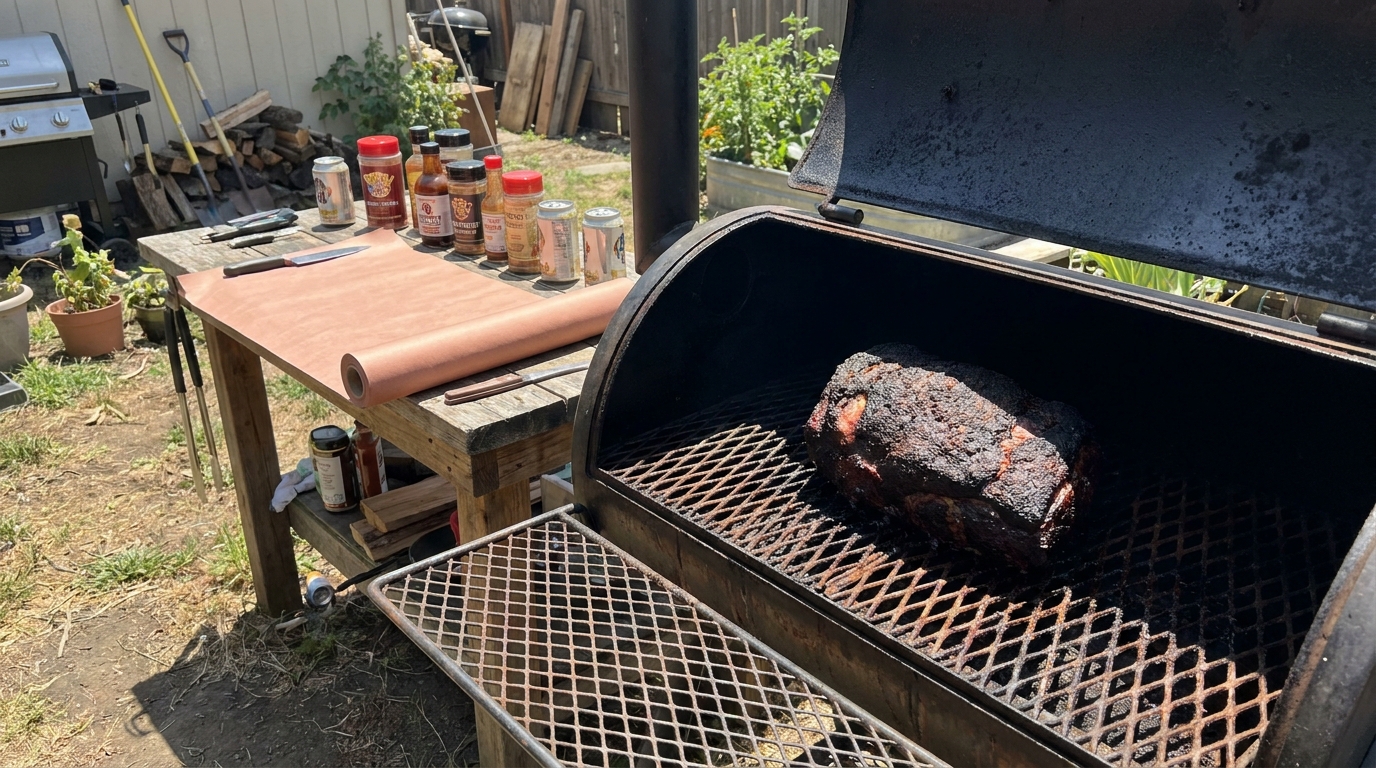
The wrap window is not open until the bark is set. Color is the first read: you want a deep mahogany crust, dry to the eye, with rendered fat starting to shine in the creases. Pale tan or blotchy red-brown means the surface is still wet. Close the lid and give it more open smoke. A wet rub wrapped in foil or paper will steam into paste.
Color alone will lie to you on pork. Sugar-heavy backyard rubs caramelize and darken faster than a salt-and-pepper Texas-style coat. Dirty smoke will also paint the surface dark without locking anything down. That is why you run the scratch test. With a gloved finger, lightly drag across a thick patch of crust. If the seasoning stays put and your finger comes away with a little oil, the bark is set. If the rub smears off and shows raw meat underneath, it is too early.
Fat render is the third check. Press the fat cap. Unrendered fat feels firm and springy, like a rubber eraser. Rendered fat yields like warm butter and looks translucent rather than chalk-white. When the cap is softening and the bark passes the scratch test, you have a surface that can survive the humidity inside a wrap. Wrap before that and the steam undoes the crust you spent hours building.
Big B’s Take: I would rather wrap a little late on pork than a little early. A perfectly set bark is one of the best parts of pulled pork — those crunchy, peppery edges tossed through the shreds. If the probe is already in the stall but the scratch test fails, I leave the paper on the table and let the butt keep riding.
Temperature Window and Wrap vs No-Wrap
Once bark is set and fat is rendering, the typical wrap window on a pork butt is 165°F–175°F (74°C–79°C). That range sits right in the stall. Below 165°F (74°C), collagen has barely started to break down and the surface is often still too wet to wrap. Above 175°F (79°C), the stall is usually breaking on its own. Wrapping that late still works, but you get less of a time save and you have already paid most of the evaporative-cooling cost.
Treat 165°F (74°C) as an alert to check the pit, not a command to wrap. Probe the thickest part of the shoulder, away from the blade bone. If you hit 168°F (76°C) and the bark still smears, wait. If you hit 172°F (78°C) with a locked crust and a soft fat cap, wrap. The number confirms you are in the stall. The surface tells you whether the crutch will help or hurt.
Foil and butcher paper both push through the stall. Foil seals tighter and cooks faster. Paper breathes a little and is kinder to bark. The materials comparison lives in foil vs butcher paper. For timing, the rule is simple: the tighter the wrap, the more set the bark needs to be before you use it. Foil on a pale butt is how you steam the crust off.
No-wrap is a real choice on pork, not a failure to finish the cook. Riding it out in open smoke gives you a crustier bark and a longer stall. You will spend more hours on the pit, and the surface will dry harder. That tradeoff is worth it if bark is the priority and you are not on a clock. If you wrap, wrap tight with no air pockets, get it back on the grate, and keep the pit in the same 225°F–250°F (107°C–121°C) range. The wrap is a stall tool, not a reason to crank the fire.
Common Wrap-Timing Pitfalls
The most common mistake is wrapping by the clock. An 8 lb butt on a hot pellet grill can look wrap-ready in five hours. The same cut on an offset holding 225°F (107°C) on a damp morning might need eight. Hours elapsed tell you almost nothing. Pit temp, humidity, rub sugar, and the size of the shoulder all change when bark sets. If your only cue is “wrap at hour six,” you will steam some cooks and overdry others.
Wrapping a pale butt is the second trap. Color that still looks tan, a scratch test that smears, or a fat cap that feels like a rubber eraser means the surface is not done. Foil makes this worse because it traps every bit of steam. If you are going to wrap early at all, paper is more forgiving — but early is still early. Give the crust time in open smoke until it locks on.
Do not skip the rest after the wrap just because you used the crutch to save time. Wrapping gets you through the stall. It does not finish the cook, and it does not replace the rest. Take the butt to probe-tender, then rest before you shred. The rest, bone test, and pull live in how to rest and pull a pork butt. This post stops at the wrap decision.
Rushing the wrap itself is a smaller but real pitfall. When the cues line up, pull the shoulder to the table, wrap it tight, and get it back on the grate. A loose wrap with air pockets lets juices pool and wash the bottom bark. Standing around with the lid off while you hunt for paper also dumps pit heat. Have the roll ready before you need it, wrap with purpose, and close the lid.
Keep the fire steady and the drinks cold. I’ll see you at the pit. - Big B
Keep the Fire Burning
How to Rest and Pull a Pork Butt for Maximum Moisture
Master the final stage of pulled pork. Learn post-cook resting, proper shredding technique, and how to lock in rich, juicy pork flavor.
Read GuideThe Overnight Pork Butt: A Lesson in Patience
Manage a long-haul fire on pork shoulder and get shreddable pulled pork without babysitting every minute.
Read GuideFat Cap Up or Down on Brisket? A Backyard Offset Answer
Skip the forum dogma. On a backyard offset, fat-cap orientation follows heat direction and a ¼-inch trim — not a one-size internet rule.
Read Guide