When to Wrap a Brisket: The Pitmaster's Timing & Decision Guide
Big B’s Quick Hits (TL;DR)
- Sensory Over Clock: Never wrap strictly by time. Base your decision on bark setting, fat rendering, and internal temperature combined.
- The Scratch Test: Touch the bark light-handed. If season crust wipes off on your finger, it is too early to wrap.
- Temperature Window: Look for 165°F–175°F (74°C–79°C) in the thick flat, right as internal temperature plateaus during the stall.
- Soft Fat Cap: Press the top fat layer. It should yield smoothly like soft butter rather than spring back like firm rubber.
Few moments in smoking a packer brisket carry more weight than deciding when to wrap. Wrap too early, and you end up with mushy, under-developed bark that lacks the smoky crunch every pitmaster craves. Wrap too late, and the intense airflow inside your pit will strip away precious moisture, leaving the lean flat dry and stringy long before the thick point softens up.
If you ask ten pitmasters when to wrap, nine will give you a specific clock time or a single internal temperature. But treating a live piece of meat like a rigid timer recipe is a recipe for inconsistency. The secret to timing your wrap perfectly lies in reading the physical transformation of the meat. In this guide, we break down the thermodynamics of the stall and the three essential sensory cues that tell you your brisket is ready for paper or foil.
Understanding Evaporative Cooling and The Stall
To understand when to wrap, you first have to understand why we wrap. Around hour five or six of a low-and-slow cook at 225°F–250°F (107°C–121°C), internal temperature climbing steadily through the 140s and 150s will suddenly come to a screeching halt around 155°F–165°F (68°C–74°C). This temperature plateau is known as the stall. Novice cooks often panic and crank their pit heat, thinking their fire died. In reality, the brisket is sweating. Moisture from deep inside the muscle fibers migrates to the surface and evaporates, cooling the meat at the exact same rate the pit is heating it.
This evaporative cooling cycle can drag on for three to six hours if left alone. While the stall is essential for building a deep smoke ring and drying out surface moisture to form a crust, prolonged exposure to dry moving air will eventually deplete the brisket’s internal reservoir. Wrapping the brisket acts as an insulator, creating a sealed environment that halts evaporative cooling. By stopping surface evaporation, internal humidity rises instantly, allowing the temperature to break out of the stall and resume climbing toward tender perfection.
However, wrapping is not just about beating the clock. Wrapping too early—before surface moisture has evaporated and rub spices have polymerized with rendered fat—traps steam against raw rub. That steam washes away seasonings and dissolves the delicate crust you spent hours building. The ideal wrap window sits precisely at the tipping point: when surface evaporation has completed its job of setting the bark, but before muscle tissue loses critical interior moisture.
Sensory Check #1: Setting the Bark
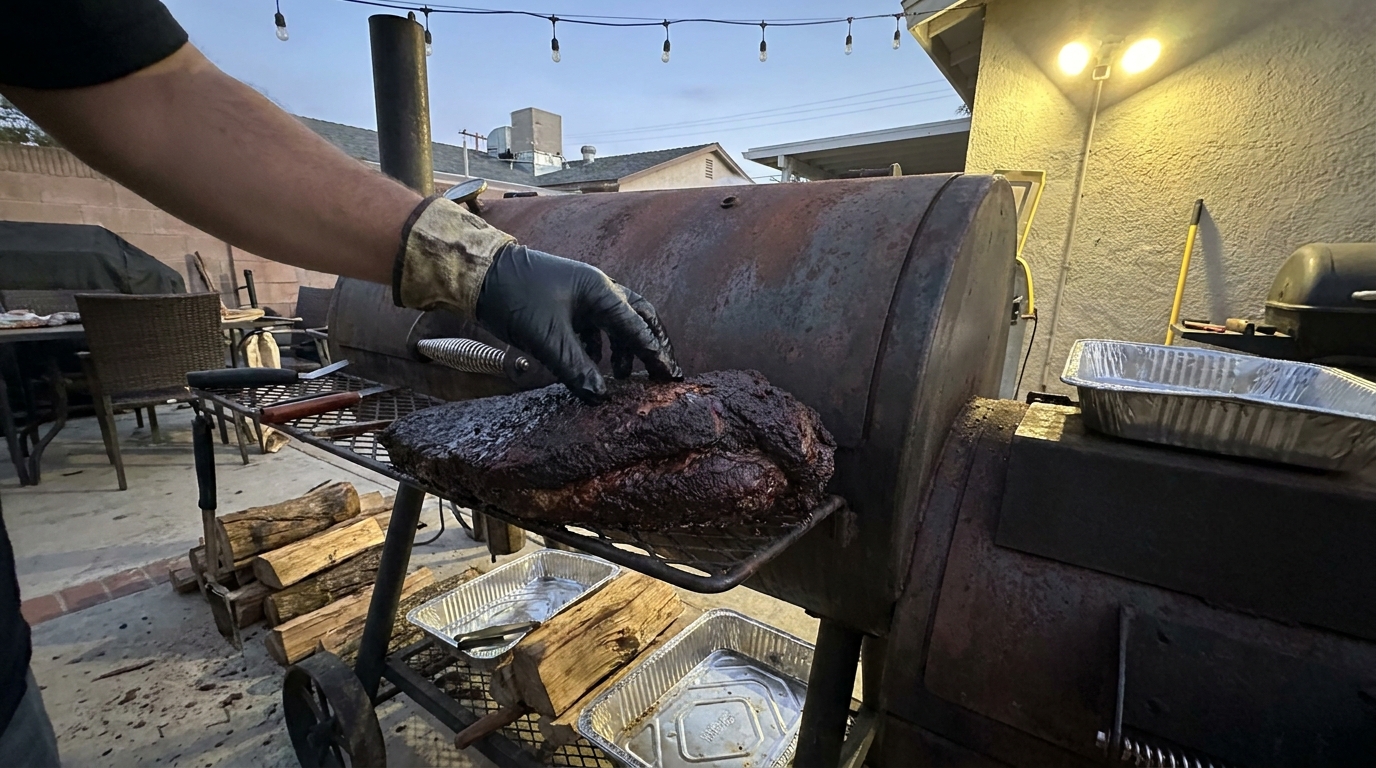
The single most critical visual cue for wrapping is the state of your bark. As coarse black pepper, kosher salt, and smoke compounds react under heat, they fuse with surface proteins and rendered fat to form a dark, fragrant crust. Before you even think about grabbing your roll of wrap, open the smoker lid and inspect the color of the brisket. You are looking for a deep mahogany hue transitioning into rich, dark obsidian around the edges.
Next, perform the pitmaster scratch test. Put on a nitrile glove over a cotton liner, pick a thick section of bark on the flat, and gently scratch the surface with your fingertip. If the rub stays locked onto the meat and your finger comes away with only clear oil, the bark is set. If the seasoning wipes away effortlessly, exposing raw pink meat underneath, close the pit lid immediately. The rub needs more time in open smoke to finish polymerizing.
If you wrap before the bark passes the scratch test, trapped steam inside the wrap will turn your rub into slop. Once the bark has set firm, however, it becomes resilient. It will withstand the humid environment inside peach butcher paper or aluminum foil without washing off or losing its textural bite.
Sensory Check #2: Fat Rendering and Surface Texture
Color alone can sometimes deceive you, especially if you use heavy sugar-based rubs or cooked with dirty smoke. That is why your second sensory check focuses on fat transformation. During the initial hours of smoking, the brisket fat cap trimmed down to a quarter-inch during trimming a packer brisket appears bright white and feels firm, dense, and springy to the touch.
As temperature inside the pit pushes past 160°F (71°C), hard subcutaneous fat begins to render down into liquid gold. Press your index finger into the center of the fat cap. Unrendered fat will feel like a firm rubber eraser, offering stiff resistance. Properly rendered fat, by contrast, will feel like warm butter or a soft sponge. Your finger should sink in smoothly without breaking through the surface crust, leaving a slight dimple behind.
Look closely at the fat color as well. Raw white fat transitions into a translucent amber yellow as lipid chains break down. When the fat cap is soft, yellowed, and sticky to the touch, it indicates that internal rendering is well underway and ready to be locked in by your wrap.
Internal Temperature Benchmarks (165°F–175°F / 74°C–79°C)
While sensory cues take priority, internal temperature provides the vital context that validates what your eyes and fingers are telling you. Insert a digital instant-read thermometer probe into the thickest section of the lean flat, taking care not to push through into the deckle fat layer separating the flat and point. In most brisket cooks, the sweet spot for wrapping lands between 165°F and 175°F (74°C–79°C).
Why this specific window? Below 165°F (74°C), intramuscular fat and tough connective collagen have barely begun to melt down into liquid gelatin. If you wrap earlier than 160°F (71°C), you bypass the critical surface dehydration phase, locking in excess moisture that steams the meat into a boiled pot roast texture. Above 175°F (79°C), the meat has already pushed through the bulk of the stall on its own; wrapping at 180°F (82°C) or higher yields minimal moisture preservation benefits while risking overcooking during the final push to probe-tender status.
Big B’s Take: Treat 165°F (74°C) as your alert signal to check the pit, not an automatic trigger to wrap. If my probe reads 168°F (76°C) but the bark still looks pale or soft, I will gladly let the brisket ride un-wrapped up to 174°F (79°C) until that crust is rock solid. Temperature tells you when to pay attention; bark texture tells you when to act.
Common Wrapping Timing Pitfalls to Avoid
The most widespread mistake backyard pitmasters make is wrapping strictly by elapsed time—such as wrapping automatically at the 4-hour or 6-hour mark. Cooker temperatures fluctuate, ambient outdoor humidity shifts, and every beef packer has a unique fat-to-lean density. A thin choice brisket on a hot pellet grill might reach wrap readiness in 4 hours, whereas a thick prime packer on an offset running at 225°F (107°C) might take 7 hours to set its bark.
Another common blunder is failing to account for wrapper material when deciding timing. If you plan to use aluminum foil—the method detailed in our guide on foil vs. butcher paper—the heavy seal traps 100% of moisture, accelerating cooking speed rapidly. Because foil steams meat intensely, you must ensure your bark is exceptionally dark and firm before wrapping in foil. Pink butcher paper, on the other hand, breathes slightly, allowing excess steam to escape while retaining fat, making it slightly more forgiving if you wrap a few degrees early.
Finally, avoid rushing the wrap step itself. When the sensory indicators line up, pull the brisket onto your wrap station table, wrap it tight with zero air pockets, and return it to the smoker promptly. A tight wrap prevents pooling juices from washing off bottom bark and ensures heat conducts evenly through the paper into the meat.
Keep the fire steady and the drinks cold. I’ll see you at the pit. - Big B
Keep the Fire Burning
How to Slice a Packer Brisket Against the Grain
Rest first, then follow the grain as it turns. Pencil-thick slices on the flat, rotate at the point, and keep bark on every piece.
Read GuideSpritz vs. Mop on Beef: Moisture, Bark, and Timing Guide
Should you spray apple cider vinegar or brush on a rich mop sauce? Learn how spritzing and mopping affect bark, temperature, and flavor on smoked beef.
Read GuideHow to Rest and Hold Brisket Without Drying It Out
Pull temps, cooler rests, and overnight holds so your brisket stays juicy from the pit to the cutting board.
Read Guide