How to Rest and Pull a Pork Butt for Maximum Moisture
Big B’s Quick Hits (TL;DR)
- Don’t Rush the Rest: Shredding pork straight off the pit causes internal juices to instantly vaporize into steam, leaving dry meat behind.
- The Bone Test: A properly cooked pork butt blade bone should slide out clean with zero tissue resistance.
- Target Pulling Temp: Let the internal pork temperature cool down to 155°F–160°F (68°C–71°C) before pulling.
- Save the Juices: Strain the rendered pan drippings, separate the excess fat, and pour the rich collagen broth back over the pulled pork.
After 12 to 14 hours of watching smoke curl over your firebox, pulling a hot pork butt off the pit feels like crossing the finish line. The dark mahogany bark is shimmering with rendered fat, and the heavenly aroma of hickory and spiced pork fills the backyard. But how you handle the next two hours will decide whether you serve juicy, melt-in-your-mouth pulled pork or dry, stringy strands that require a bottle of sauce just to swallow.
Many backyard cooks make the mistake of ripping into a pork shoulder the second it comes off the smoker. Rushing to shred steaming meat releases a massive plume of vapor—vapor that represents all the trapped fat and moisture you spent half a day cultivating. In this guide, we cover the exact resting protocol, bone removal cues, and pulling techniques to ensure your pork butt reaches its absolute peak texture and juiciness.
Confirming Probe-Tender Doneness and Bone Release
Before you pull your pork shoulder off the smoker to rest, you must verify that internal connective tissue has fully rendered down. Insert an instant-read thermometer probe from your backyard probe kit into multiple areas of the shoulder: the thickest part of the money muscle, near the center, and around the blade bone. The probe should slide into the meat with zero friction—feeling like a hot knife going through room-temperature butter. In most pork butts, this probe-tender state occurs between 203°F and 208°F (95°C–98°C).
Next, perform the ultimate pitmaster doneness test: the blade bone release. Reach down with heat-resistant gloves and grab the exposed tip of the flat blade bone sticking out of the side of the shoulder. Give it a gentle wiggle and twist. If the bone feels locked in tight, the collagen surrounding the joint hasn’t broken down; close the lid and let it cook for another thirty minutes. If the bone wiggles freely and pulls out smooth and bone-dry with no meat clinging to it, your pork is done.
Never rely solely on a single thermometer reading without testing probe resistance in several spots. Pork shoulders contain dense clusters of muscle fibers separated by thick fat seams. If one section reads 205°F (96°C) but another section still feels rubbery to the probe, give the cooler section time to catch up so every bite pulls effortlessly.
The Mandatory Resting Phase (Steam Release & Juice Stabilization)
Once your pork butt passes the probe test, transfer it inside a foil pan or wrapped in butcher paper to a counter or prep table. Do not immediately place a tight lid on top or stuff it directly into an insulated cooler. If you trap boiling internal heat inside a sealed box, carryover cooking will push internal temps past 212°F (100°C), boiling off interior moisture and turning the muscle fibers into mush.
Vent the wrap or open the top of the foil pan for 15 to 20 minutes on the counter. This allows trapped steam to blow off and lowers internal meat temperature to around 180°F (82°C). Once the steam subsides, re-wrap the butt loosely or place it inside a warm insulated cooler lined with dry towels for long holding—a technique detailed in our guide to overnight pork butt.
Let the pork butt rest until its internal temperature drops down to 155°F–160°F (68°C–71°C) before you begin pulling. At this lower temperature, rendered gelatin and liquefied fats thicken slightly, coating the muscle fibers rather than evaporating into steam when exposed to air. Resting for at least one hour (and up to four hours in a cooler) guarantees that every ounce of flavor stays locked inside the meat.
Pulling Techniques: Coarse Chunks vs. Shredded Threads
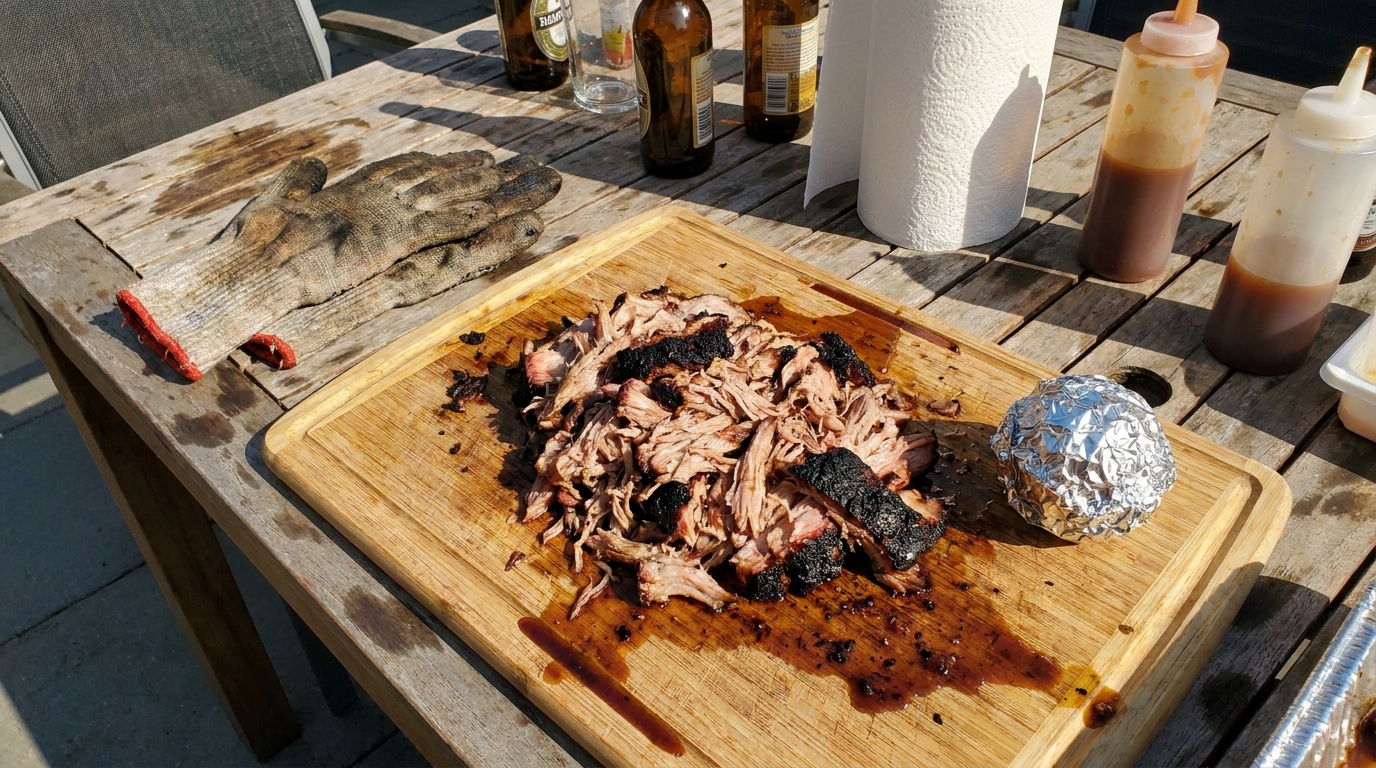
When it comes time to pull, ditch the mechanical shredding claws and stand mixers. Machine shredding grinds rich bark into tiny grey flecks and turns tender pork into fine, stringy sawdust that dries out within minutes of hitting the serving tray. The best tool for pulling pork butt is your own hands—protected by insulated cotton glove liners underneath heavy food-grade nitrile gloves.
Start by pulling out the blade bone completely and discarding it. Next, break the shoulder down into four or five major natural muscle sections. Inspect each chunk: remove any unrendered pockets of soft rubbery fat or thick connective cartilage hidden in the center of the shoulder. Work through the meat with your fingers, breaking it into bite-sized coarse chunks about the size of a thumb.
Coarse chunks retain their interior moisture far better than fine threads because they expose less surface area to the air. As you work, toss the dark outer bark pieces evenly throughout the lighter interior meat. Every serving should feature a balanced combination of crunchy, seasoned bark and tender, juicy muscle.
Re-incorporating Pan Drippings and Finishing Sauces
The single biggest secret to commercial-grade pulled pork is taking advantage of the liquid gold sitting at the bottom of your wrap or foil pan. During the cook, muscle tissue sheds liquid while intramuscular collagen degrades into rich gelatin. That dark liquid is packed with smoke flavor, melted fat, and dissolved rub spices.
Carefully pour all pan juices through a fine mesh strainer into a fat separator cup. Let the clear yellow oil float to the top, then discard the excess fat or save it for frying potatoes. Take the dark, gelatin-rich broth settled at the bottom and drizzle it over your freshly pulled pork while gently tossing the meat. The pork fibers will drink up that warm liquid broth instantly, replacing any surface moisture lost during pulling.
Big B’s Take: For an extra pop of flavor, mix half a cup of your strained pan drippings with two tablespoons of apple cider vinegar, a splash of apple juice, and a pinch of your rub. Toss this light vinegar-dripping mixture through your pork just before serving. The acid cuts through the rich fat, waking up the bark spices without drowning out the natural pork taste under heavy sweet barbecue sauce.
Storing and Reheating Leftover Pulled Pork
If you are cooking ahead for a party or feeding a crowd, hold off on pulling the entire shoulder until right before serving whenever possible. Keeping the pork in whole intact muscle chunks preserves interior moisture far better than letting shredded pork sit uncovered in a warming tray. If you must pull in advance, keep the meat tightly covered in a pan with a splash of apple juice or broth at 150°F (66°C).
For long-term storage, portion cold pulled pork into vacuum sealer bags alongside a tablespoon of reserved pan drippings per bag. Vacuum seal and freeze for up to six months. Reheating vacuum-sealed pulled pork is effortless: submerge the frozen bag in a pot of simmering water at 165°F (74°C) for 30 minutes. The meat reheats in its own steam with zero moisture loss, tasting just as tender and smoky as the day it came off the pit.
Keep the fire steady and the drinks cold. I’ll see you at the pit. - Big B
Keep the Fire Burning
When to Wrap a Pork Butt: Stall, Bark, and Timing
Don't wrap a pork butt by the clock. Use stall, bark set, and fat render to decide when foil or paper helps — and when to ride it out.
Read GuideThe Overnight Pork Butt: A Lesson in Patience
Manage a long-haul fire on pork shoulder and get shreddable pulled pork without babysitting every minute.
Read GuideHow to Slice a Packer Brisket Against the Grain
Rest first, then follow the grain as it turns. Pencil-thick slices on the flat, rotate at the point, and keep bark on every piece.
Read Guide