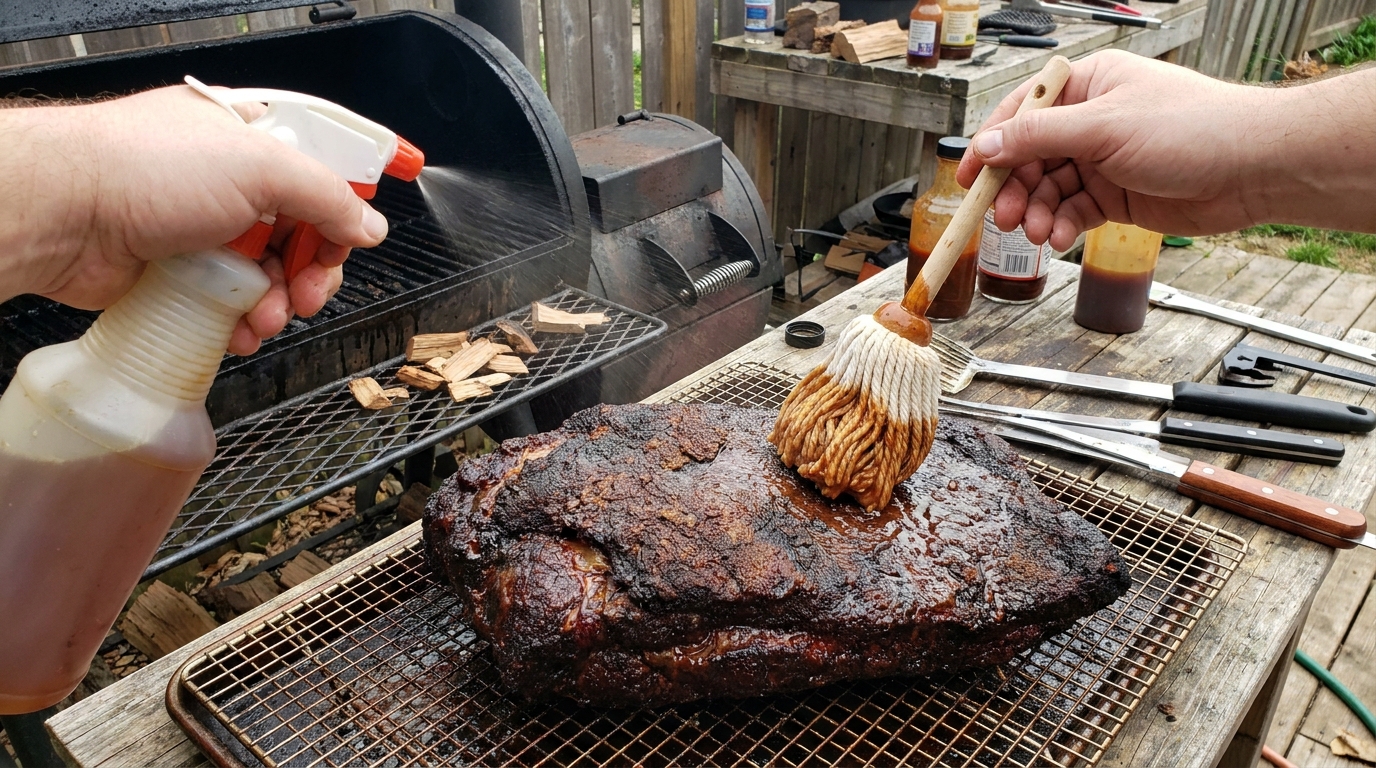
Spritz vs. Mop on Beef: Moisture, Bark, and Timing Guide
Big B’s Quick Hits (TL;DR)
- Spritz for Brisket: A fine acid mist cools hot spots, draws smoke compounds, and preserves coarse black pepper bark without eroding rub.
- Mop with Caution: Cotton mop brushes lay down heavy moisture and fat, but physical wiping can smear delicate spice crusts on beef.
- Wait for Bark Set: Never apply any liquid during the first 2 to 3 hours of a cook; surface rub must polymerize before liquid touches it.
- Stop Before Wrapping: Cease all spritzing or mopping 30 minutes before wrapping so excess surface liquid evaporates into the pit air.
When smoking a packer brisket over a 12-hour cook, pitmasters constantly manage the delicate balance between dry convective airflow and meat surface hydration. Open heat currents inside an offset smoker continuously pull moisture out of the beef flat. To combat dry edges and enhance smoke ring development, pitmasters turn to liquid surface treatments: spritzing with a fine spray bottle or slathering with a traditional cotton mop.
While both techniques introduce surface moisture, they operate on vastly different physical mechanics and produce distinctly different results on beef bark. Using the wrong method at the wrong time can wash off coarse black pepper seasonings, delay fat rendering, or turn crispy bark into soggy mush. In this guide, we break down the science of spritzing versus using a mop sauce on smoked beef, helping you choose the right technique for your pit.
The Mechanics of Spritzing: Fine Acid Mists
Spritzing relies on an atomizing spray bottle to deliver a micro-fine aerosol mist of liquid across the surface of the meat. Popular spritz blends include equal parts apple cider vinegar and water, beef broth, pickle juice, or dark beer. Because the liquid leaves the nozzle in microscopic droplets, it settles softly onto the meat without disturbing the underlying rub layer.
The primary function of a spritz is localized evaporative cooling. When hot convective draft sweeps over the smoker chamber, exposed thin edges of the brisket flat can heat up too fast, overcooking before the thick center renders. A gentle spritz on those hot edges lowers surface temperature by a few degrees, preventing charred or burnt corners.
Furthermore, moisture acts as a smoke magnet. Smoke particles carrying vaporized wood compounds dissolve far more readily into a moist surface film than a bone-dry crust. Acidic spritzes containing vinegar or fruit juice lower surface pH, which helps preserve the pink oxymyoglobin ring under the bark while encouraging deep mahogany color development.
The Mechanics of Mopping: Rich Glazes and Thin Broths
Mopping is a classic heritage technique born in Texas and Carolina barbecue pits. It uses a miniature cotton string mop dipped into a warm bucket of liquid broth, vinegar, melted lard, or butter. The pitmaster dabs the heavy cotton head over the meat, transferring a generous pool of liquid and rendered fats directly onto the surface.
Unlike fine spritzing, mopping delivers significant volume. A mop sauce can carry heavy suspended solids: coarse crushed red pepper flakes, minced garlic, melted butter, and Worcestershire. The fat content in a mop sauce acts as an insulator, basting the meat in liquid lipids while adding rich, savory notes to the exterior layer.
However, mopping introduces physical contact. When you dab or drag a cotton mop across meat, the wet string strands exert friction against the surface crust. On whole hog or pork shoulders, this basting action builds up rich glaze layers. On a beef brisket coated in coarse black pepper and kosher salt, aggressive mopping can lift rub off the meat entirely.
Bark Impact: Smoke Ring, Sugar Caramelization, and Rub Rub-Off
The ultimate decision between spritzing and mopping comes down to how each technique affects bark formation. Bark forms through a complex reaction where salt draws surface moisture out of meat, creating a slurry that dissolves rub spices. As heat rises, surface proteins and fat melt together, undergoing the Maillard reaction to form a crunchy, dark outer crust.
If you mop a brisket with a heavy cotton head before the rub has fully set, the mechanical friction will wipe away coarse pepper, leaving bare patches of grey meat. Furthermore, dumping large volumes of liquid mop sauce on top of fat lowers surface temperatures drastically, stalling fat rendering and turning crunchy bark into soggy, wet rub slop.
Spritzing, by contrast, preserves bark integrity. Because an atomized mist lands gently on the surface without mechanical friction, rub spices remain anchored exactly where you placed them during prep. The light layer of moisture promotes uniform caramelization of natural sugars and smoke particles while keeping the bark firm and resilient.
Application Timing: When to Start, Frequency, and When to Stop
Timing is everything when applying liquids during a cook. Never spritz or mop meat during the first 2 to 3 hours of smoking. During this initial window, the meat surface is wet from internal condensation and rub spices are just beginning to adhere. Spritzing raw rub will wash spices off into the water pan before they set.
Once you reach hour 3 or 4 and pass the bark scratch test, begin spritzing every 45 to 60 minutes. Open the smoker door quickly, mist any dark or dry edges on the flat, and close the lid immediately to conserve pit heat. If you decide to mop beef ribs or pork shoulders, dab gently without dragging the cotton mop head across the bark.
Stop all liquid application 30 minutes before you plan to execute your wrap, following the decision rules in our guide on when to wrap a brisket. Halting spritzing allows surface moisture to evaporate completely inside the pit, locking in a dry, crunchy bark layer before the meat goes into butcher paper or foil.
Comparison Summary: Which Technique Fits Your Pit?
| Feature / Criteria | Spritzing (Spray Bottle) | Mopping (Cotton Mop) |
|---|---|---|
| Best Used On | Brisket, Beef Ribs, Pork Butt | Pork Ribs, Whole Hog, Santa Maria Beef |
| Primary Goal | Cool hot spots, draw smoke, set bark | Baste in fats, layer bold vinegar/spices |
| Bark Friction | Zero (atomized fine mist) | High (physical cotton contact) |
| Liquid Volume | Light & controlled | Heavy & saturated |
| Risk Factor | Excess pit door opening | Washing off coarse rub crust |
Big B’s Take: For beef packer briskets and dino ribs, spritzing with apple cider vinegar and water in a quality spray bottle is my absolute winner. It gives you surgical precision to target dry flat corners without messing up that gorgeous black pepper bark. Save the cotton mop bucket for Carolina pork ribs and open-pit grilling where heavy basting shines.
Keep the fire steady and the drinks cold. I’ll see you at the pit. - Big B
Keep the Fire Burning
How to Rest and Hold Brisket Without Drying It Out
Pull temps, cooler rests, and overnight holds so your brisket stays juicy from the pit to the cutting board.
Read GuideFat Cap Up or Down on Brisket? A Backyard Offset Answer
Skip the forum dogma. On a backyard offset, fat-cap orientation follows heat direction and a ¼-inch trim — not a one-size internet rule.
Read GuideHow to Slice a Packer Brisket Against the Grain
Rest first, then follow the grain as it turns. Pencil-thick slices on the flat, rotate at the point, and keep bark on every piece.
Read Guide