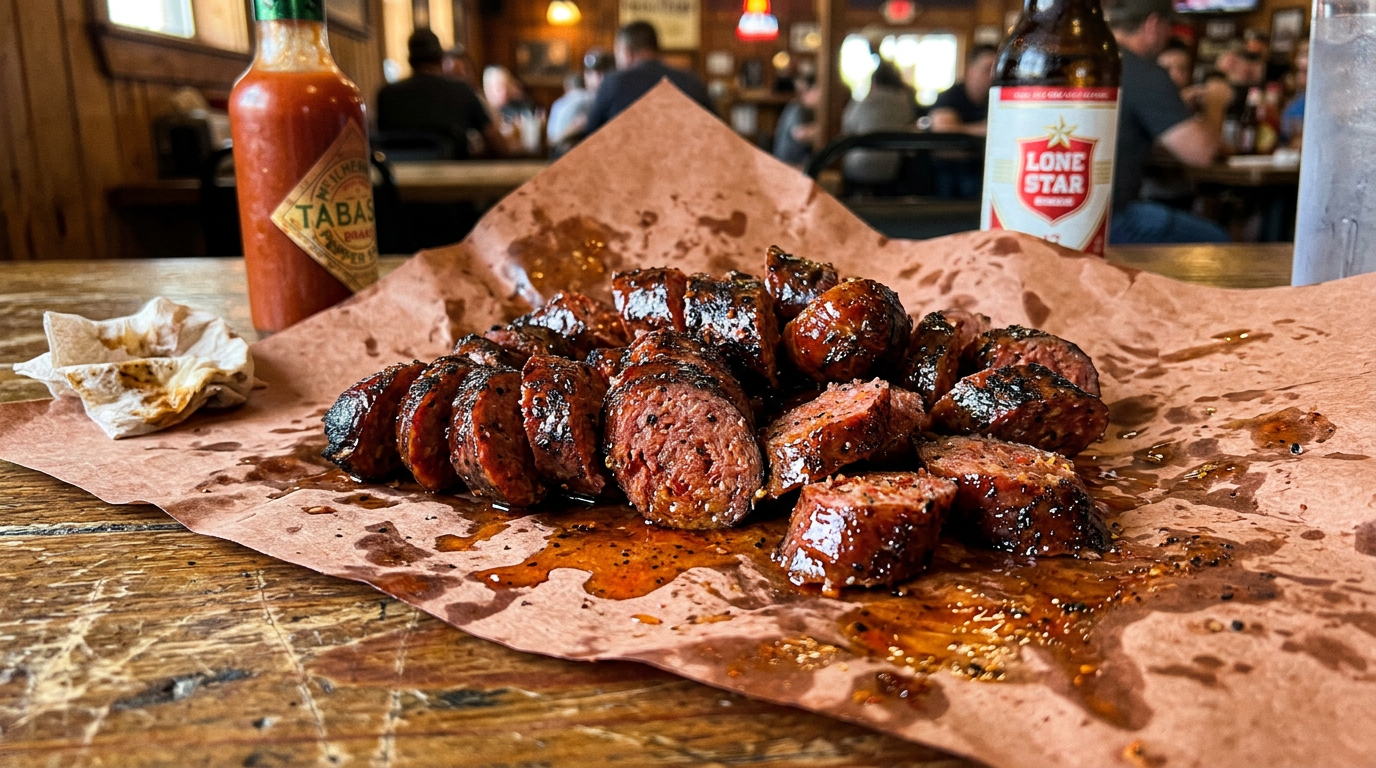
Texas-Style 'Hot Links' from Scratch
The Art of Sausage
Making sausage at home is a rite of passage for serious pitmasters. It gives you total control over the fat ratio, the grind size, and the flavor profile. The Texas “Hot Link” is a staple of the Hill Country BBQ trinity. It’s known for its coarse texture, fiery kick, and snappy casing.
The Golden Ratio
The most critical aspect of sausage making is the meat-to-fat ratio. If your sausage is too lean, it will be dry and crumbly.
- The Target: 70% lean meat to 30% hard fat.
- The Blend: A classic Texas link uses a mix of beef like brisket trimmings and pork like pork shoulder.
The Grind and The Bind
- Keep it Cold: Everything must be freezing cold. That means the meat, the grinder parts, and the bowl. If the fat gets warm, it will smear instead of grind. That ruins the texture.
- Coarse Grind: Use a coarse die on your grinder for that authentic, rustic texture.
- The Mix: Add your spices. Go heavy on the black pepper, cayenne, and garlic. Add a splash of ice-cold beer or water. Mix vigorously with your hands until the meat becomes sticky and binds together. This is the secret to a good link.
Stuffing
Thread natural hog casings onto your stuffer. Work slowly and make sure there are no massive air pockets. But don’t overstuff them. They will burst when you twist them into links. Once stuffed, twist the long coil into 6-inch links.
Smoking the Links
- Dry the Casings: Hang the links in the fridge overnight. This dries out the casing. It helps it take on smoke and gives it that famous “snap” when you bite into it.
- Hot Smoke: Smoke the links over Post Oak at 250°F until they reach an internal temperature of 160°F.
- The Ice Bath: Immediately plunge the cooked sausages into an ice water bath. This stops the cooking process instantly. It also prevents the casings from shriveling, keeping the links plump and juicy.
Keep the Fire Burning
When to Wrap a Pork Butt: Stall, Bark, and Timing
Don't wrap a pork butt by the clock. Use stall, bark set, and fat render to decide when foil or paper helps — and when to ride it out.
Read GuideSpritz vs. Mop on Beef: Moisture, Bark, and Timing Guide
Should you spray apple cider vinegar or brush on a rich mop sauce? Learn how spritzing and mopping affect bark, temperature, and flavor on smoked beef.
Read GuideHow to Rest and Pull a Pork Butt for Maximum Moisture
Master the final stage of pulled pork. Learn post-cook resting, proper shredding technique, and how to lock in rich, juicy pork flavor.
Read Guide