The Art of Low and Slow: Smoked Brisket 101
The Big One
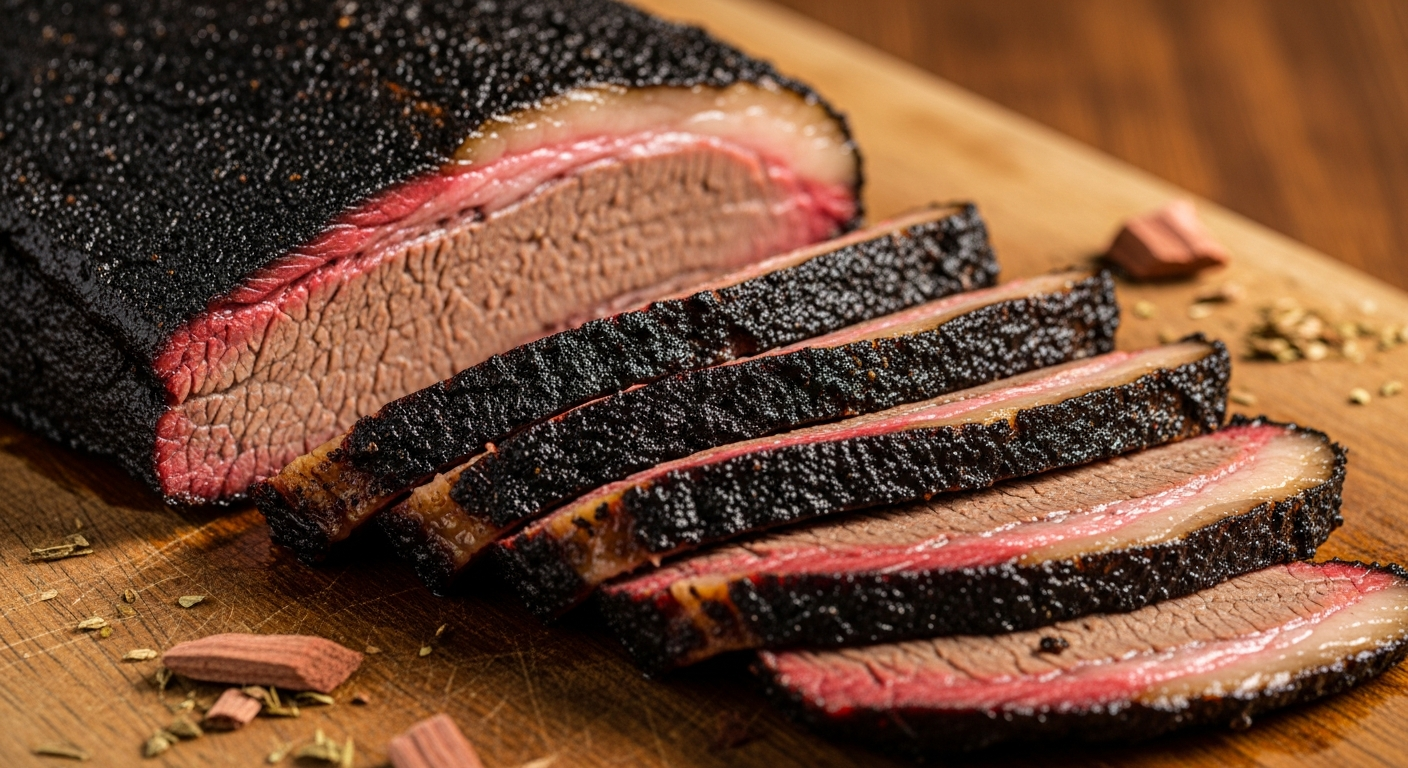
If you want to earn your stripes in the backyard, you have to cook a brisket. Patience, a clean fire, and a feel for how the meat reacts over 12 or 16 hours. When you get it right, you get a dark bark, a deep pink smoke ring, and meat that pulls apart without falling into mush.
This is the full cook. When you are ready to obsess over the cooler and the overnight hold, read how to rest and hold brisket.
Selection: The Foundation
Buy a full packer. That means the lean flat and the fatty point still attached.
- Grade: USDA Prime if the budget allows. Extra marbling is insurance on a long cook.
- Flexibility: Still in the cryovac, see if it bends easily. A stiff board of a brisket often fights you later.
Trimming for Success
Trim while the meat is cold. Fat cuts cleaner that way. Aim for a smooth shape so heat and smoke move evenly.
- Fat Cap: Trim the heavy bottom fat to about 1/4 inch.
- Silver Skin: Peel silver skin off the top of the flat.
- Edges: Square off thin flaps that will only burn.
The Rub: Keeping it Simple
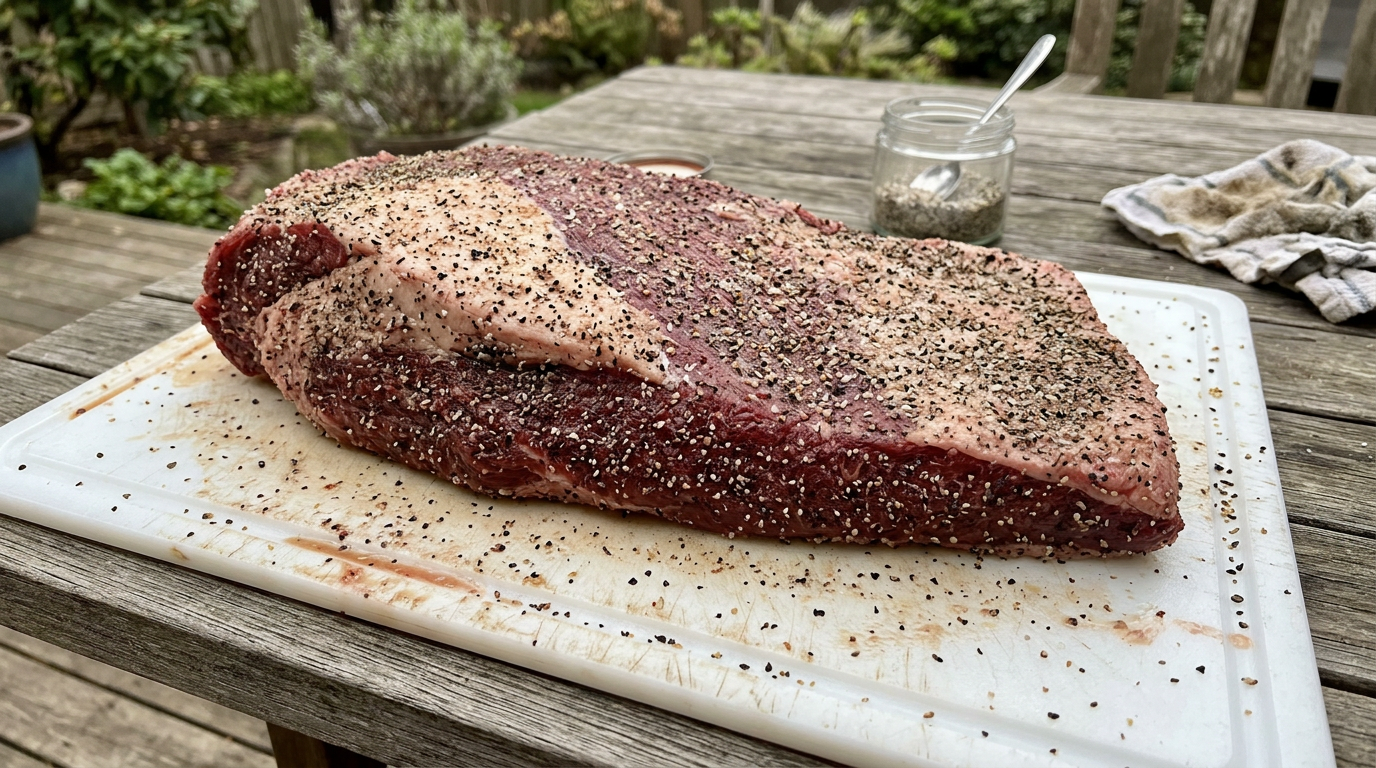
A Dalmatian rub is the Texas baseline.
- 1 part coarse kosher salt
- 1 part 16-mesh coarse black pepper
Coat every side. Coarse pepper helps build that gravelly bark.
The Smoking Process
- Preheat: Stabilize at 225°F (107°C) to 250°F (121°C). Burn clean wood. Post oak is my Texas default. Hickory works if you keep the fire honest.
- Placement: Fat toward the heat source on your cooker. Watch for blue smoke, not billowing white.
- The Stall: Around 160°F to 170°F (71°C to 77°C) internal, the temp plateaus. That is the stall.
- The Wrap: When the bark is set and the color looks right (often near 165°F / 74°C), wrap tight in peach butcher paper. Foil is faster but softer on bark. Full wrap debate: foil vs butcher paper.
The Finish and The Rest
Pull when it is probe tender, usually 200°F to 205°F (93°C to 96°C). The probe should slide into the thickest part of the flat with almost no push.
Critical step: Rest the brisket still wrapped. A towel-lined cooler (no ice) for at least 2 to 4 hours lets juices settle and collagen finish turning into gelatin. Carryover cooking will nudge the temp a little after you leave the pit. That is normal.
For party holds, overnight timing, and the mistakes that dry out the flat, use the full rest and hold guide.
Slicing for Service
Always slice against the grain.
- Start at the thin end of the flat. Pencil-thick slices.
- At the point, the grain turns. Rotate 90 degrees and keep slicing so every piece gets bark and fat.
Want the point turned into candy? That is burnt ends at home.
Keep the fire steady and the drinks cold. I’ll see you at the pit. - Big B
Keep the Fire Burning
Trimming a Packer Brisket for Even Smoking
Don't just throw a brisket on raw. Learn how to shape a packer brisket like a surfboard for aerodynamic smoke flow and consistent cooking.
Read GuideSmoked Chuck Roast: The 'Poor Man's Brisket' That’s Rich in Flavor
Big B shows you how to take a humble chuck roast and turn it into tender, smoky beef that gives brisket a run for its money.
Read GuideSpritz vs. Mop on Beef: Moisture, Bark, and Timing Guide
Should you spray apple cider vinegar or brush on a rich mop sauce? Learn how spritzing and mopping affect bark, temperature, and flavor on smoked beef.
Read Guide