Post Oak
Intensity
Smoke Profile
Mild, clean, and consistent. The backbone of Central Texas BBQ.
Best For
The Central Texas Standard
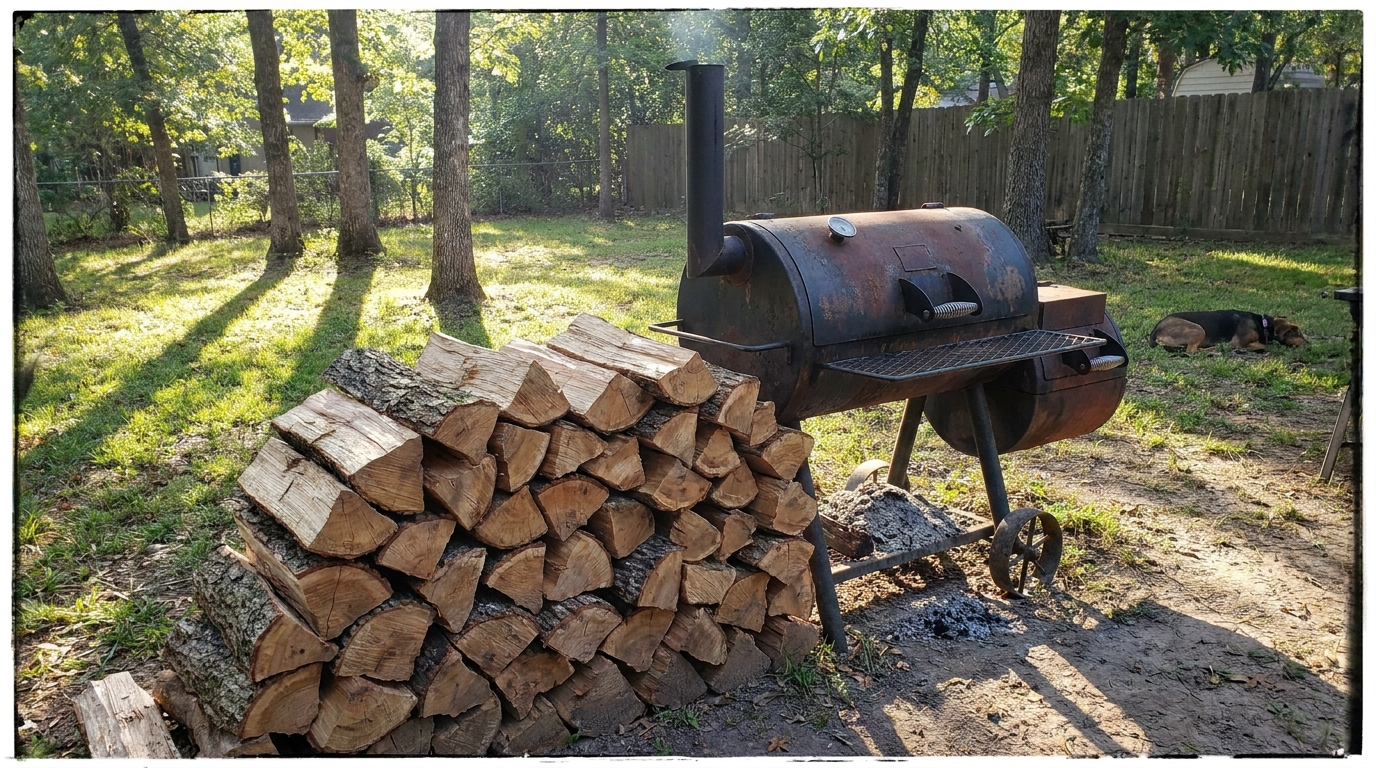
Post Oak (Quercus stellata) is the legendary fuel that powers the famous barbecue joints of Central Texas. Pitmasters favor it because it burns hot, creates a highly stable bed of coals, and yields a clean, neutral-sweet smoke that is extremely forgiving during long cooks.
Unlike stronger woods that can turn meat bitter if airflow drops, Post Oak allows you to run a clean wood fire for twelve hours or more with minimal risk of creosote buildup. For how to manage this wood on your cooker, check out Trimming a Packer Brisket for Even Smoking and Managing an Overnight Fire on an Offset Smoker.
Flavor Profile and Pairings
This wood sits in the sweet spot of the flavor spectrum, offering a smoke profile that is stronger than fruitwoods like apple, but milder than hickory. It delivers a classic, clean campfire flavor that lets the natural taste of beef and pork remain the star, making it the perfect choice for brisket.
It pairs exceptionally well with beef ribs, pork shoulder, and spare ribs. For a demonstration of Post Oak on pork, check out Texas Style Spare Ribs: No Wrap, Heavy Pepper and read about the regional style in the South Texas BBQ Ultimate Guide.
The Seasoning Sweet Spot
Proper seasoning is critical to getting clean smoke from Post Oak. Green wood is full of water and sap, which will hiss and steam in your firebox, resulting in a cold fire and heavy soot that ruins the flavor of your meat. Aim for a moisture level between 15% and 20%, which typically requires six to nine months of seasoning in a stacked, covered woodpile.
However, be careful not to use wood that has sat too long. If oak is left dry for more than two years, it becomes dry-rotted and loses its density, burning up instantly like paper without creating a stable bed of coals. Keep your splits stacked off the ground in a dry area with plenty of cross-ventilation to maintain the wood’s density.