How to Season and Store Firewood for Clean Offset Smoke
Big B’s Quick Hits (TL;DR)
- Seasoned means dry, not old: Moisture has to leave the cells. Time plus airflow does that work. A dusty log that still feels heavy is not ready.
- Off the ground, top only: Stack on pallets or rails. Cover the top so rain sheds. Leave the sides open so the pile can breathe.
- Wet wood this weekend: Don’t hang a packer on sopping splits. Use smaller pieces, a hotter coal bed, mix in known-dry wood, or wait.
Clean cooking starts in the woodpile, not in the rub. Wet splits smolder instead of burning, and that thick white plume is dirty smoke waiting to land on the bark. You can run a careful fire and still end up with bitter meat if the fuel is the problem.
Seasoning firewood is not a flavor trick. It is moisture leaving the wood so a split can catch, burn, and give you a clean fire. If smoke is already looking wrong on cook day, use the dirty-smoke offset rescue. This post is the backyard work that happens months before you strike a match: dry the wood, stack it so it breathes, and cover the top without turning the pile into a tarp tomb.
What “Seasoned” Actually Means
Seasoned firewood is dry enough to burn clean. It is not “old wood” sitting in a corner until the bark falls off. Fresh-cut, or green, wood is full of water in the cells. That water has to heat up and steam out before the wood can actually combust. While it steams, the fire smolders. Smoldering wood throws thick white or grey smoke, and that smoke is dirty smoke. The unburned particles land on meat and taste bitter. They also cook onto the pit as creosote.
A clean offset fire wants thin, almost invisible blue smoke. You get that when the split is dry enough that the faces catch and the coal bed stays hot. Wet wood fights you the whole cook. It hisses. It refuses to catch. You keep adding more logs to chase temperature, and the chamber fills with white smoke instead of a steady burn.
Big B’s Take: If the wood is wet, no vent trick saves the cook. Airflow cannot burn water. Dry the pile first, then worry about fire management.
How Long, and How to Tell It’s Ready
Most backyard splits need six to twelve months of seasoning, stacked with airflow, before they belong in an offset. Softwoods and small pieces dry faster. Dense hardwoods take longer. Climate matters. A dry, windy yard will season wood faster than a humid, shaded corner. There is no universal calendar date on the bag. The wood tells you when it is ready.
Pick up a split you know is dry and one from the new pile. Seasoned wood feels lighter than it looks. The ends check, meaning they show small cracks as moisture leaves. Bark starts to loosen. The split faces look dull and pale instead of wet and shiny. If you have a moisture meter, you are looking for roughly 15 to 20 percent. If you do not, the weight-and-checking test is enough for backyard cooking.
Post oak is dense and it is worth the wait, but do not let it sit until it goes punky. Over-aged oak loses density, burns up like paper, and will not hold a coal bed. Same story with other oak splits. Season until it is dry and still solid. If the wood crumbles, smells musty, or feels spongy, it is past useful. Burn that in a fire pit, not under a brisket.
Stacking and Storage That Breathes
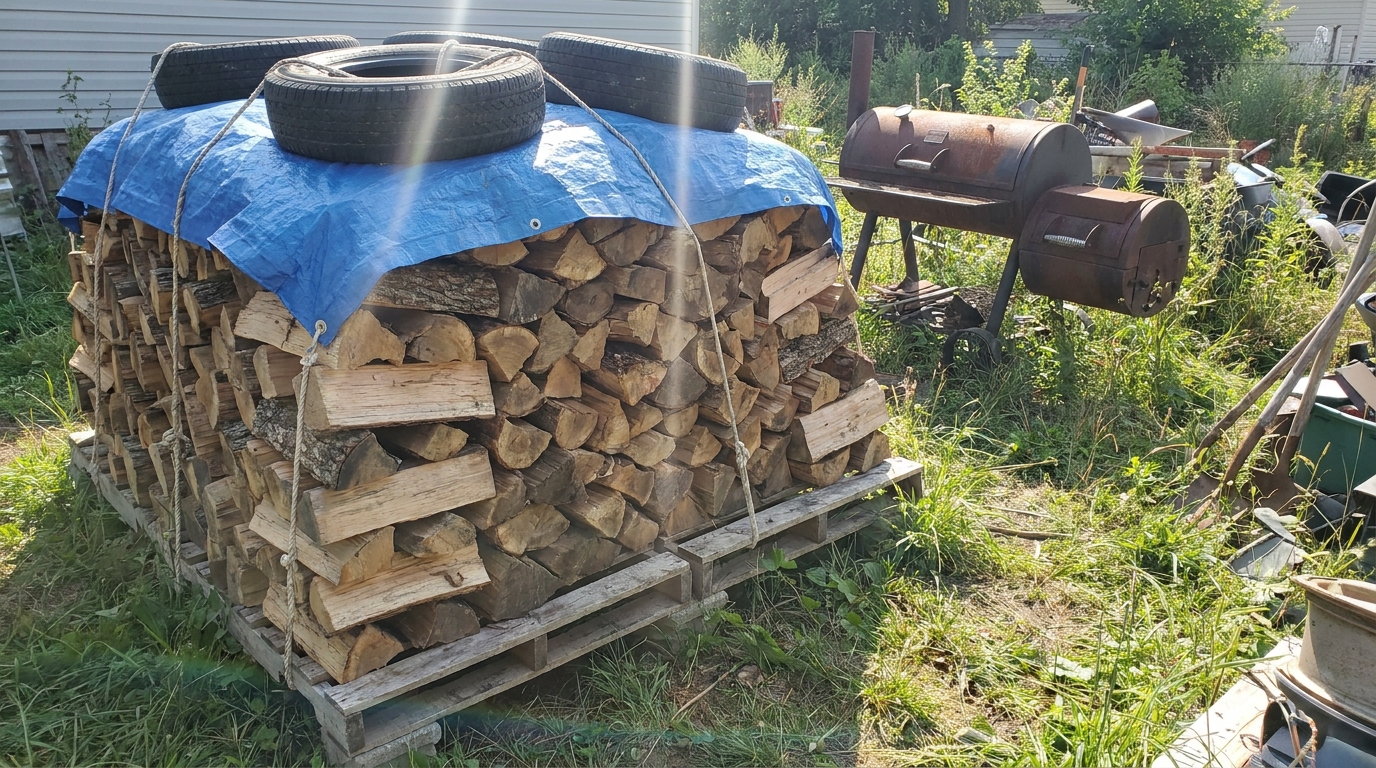
Get the wood off the dirt. Ground moisture wicks into the bottom row and you season the top while the base stays wet. A pallet, rails, or a simple rack all work. Leave gaps between rows so air can move through the stack. A tight, pretty wall looks tidy and dries slow.
Cover the top only. A roof, a sheet of metal, or a tarp that sheds rain is enough. If you wrap the whole pile like a burrito, you trap humidity and grow mold. The sides need to breathe. Leave the tarp short of the ground so wind can move through.
Park the stack near the pit so you are not hauling armloads across a wet lawn at 2 a.m., but keep it out of sprinkler spray and away from the downspout. A sunny, breezy wall of the yard beats a damp fence line. Big B’s Take: I would rather have an ugly, breathing pile than a covered tomb that looks neat from the driveway.
If This Weekend’s Wood Is Still Wet
If the wood still feels heavy and the ends look wet, do not hang a packer on it and hope. Wet splits will smolder, the temp will bounce, and you will spend the cook fighting white smoke. Delay the cook if you can. Dry wood is the cheapest insurance you have.
If you have to burn this weekend, split the logs smaller so they dry and catch faster. Build a hotter coal bed before you add wood. Preheat splits on the firebox or next to the fire so they are not ice-cold when they go in. Mix in known-dry wood if you have any, and use the wet stuff as a last resort, not the whole fuel load.
Fire management still matters. Keep the chimney open and feed the fire so it actually burns, which is the same discipline as mastering an offset. Smaller pieces and a hotter bed help a damp split, but they do not turn green wood into seasoned oak. If the stack hisses and the smoke stays thick and white, pull the plan. Brisket will wait. Bitter bark will not.
Keep the fire steady and the drinks cold. I’ll see you at the pit. - Big B