How to Manage Ash and the Coal Bed Mid-Cook on an Offset Smoker
Big B’s Quick Hits (TL;DR)
- Clear the Lower Air Intake: Ash piling up under your fire grate chokes off fresh air, starving coals of oxygen and dropping pit temps.
- Avoid Ash Dust Clouds: Never stir coals aggressively from above. Rake ash gently from underneath the grate so fine dust doesn’t blow onto your meat.
- Consolidate for Core Heat: Rake spent embers into a tight, concentrated mound against the air intake to keep coal bed temperatures scorching hot.
- Pre-Warm Your Logs: Rest fresh wood splits on top of the hot firebox so they catch fire in seconds when placed onto the coal bed.
During an 8 to 14 hour cook on a stick burner, most pitmasters focus all their attention on wood split selection and pit temperature gauges. But six hours into a brisket cook, a hidden fire killer builds up at the bottom of your firebox: wood ash. As hardwood logs burn down, fine white ash drops through the fire grate, gradually packing the bottom of the firebox tight.
When ash buries the lower ventilation slots, it chokes off oxygen flow to your fire. Deprived of air, glowing coals cool off, fresh wood logs smolder instead of catching fire, and your smoker produces bitter, black dirty smoke. Learning how to clear ash mid-cook without blowing fine dust onto your meat is an essential skill when mastering the offset smoker. Here is how to keep your coal bed hot and your airflow clean.
Step 1: Diagnose Ash Suffocation and Airflow Obstruction
The first sign of mid-cook ash suffocation is a sudden drop in pit temperature that doesn’t respond when you add fresh wood. You might notice your firebox damper is wide open, yet flames inside look lazy, smoldering, and dark red rather than bright yellow and orange. When you peek inside the firebox door, spent logs appear buried in a deep bed of fine grey dust that fills the air space underneath your fire grate.
Proper draft requires unobstructed airflow. Air must enter through the lower pinwheel or slide damper, pass under the wire grate, flow up through glowing coals, and exit out the cook chamber stack. If accumulated ash rises higher than the bottom wire grate, incoming air is forced to route around the coals rather than through them.
Big B’s Take: Check your firebox floor every three to four log additions. If the ash mound under your grate reaches within an inch of the wire floor, it is time to clear the deck. Don’t wait until the fire is actively suffocating and smoking out your cook chamber to act.
Step 2: Clear Under-Grate Ash Without Kicking Up Dust
The golden rule of mid-cook ash removal is to work strictly underneath the charcoal grate. Never take a poker and violently jab or stir glowing embers from above while meat is inside the cook chamber. Doing so sends a massive cloud of fine ash airborne. Draft suction will suck that ash straight into the cook chamber, coating your brisket bark in bitter grey dust.
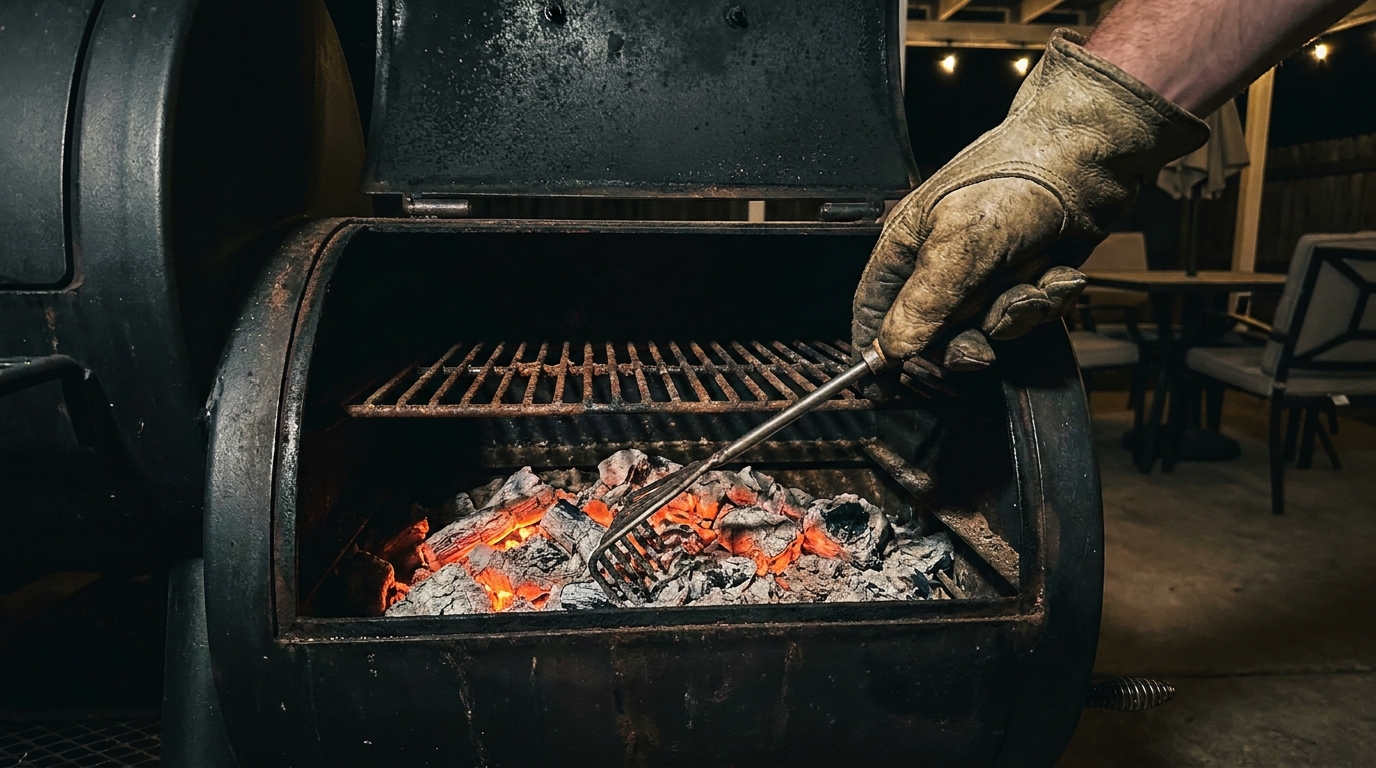
Instead, take a long metal ash rake or L-shaped fire poker and slide it into the firebox opening underneath the grate. Use slow, deliberate side-to-side sweeping strokes to push accumulated ash into the corners or down into the removable ash pan if your smoker model features one.
If your smoker does not have a removable ash drawer, use the rake to pull excess cold ash out through the main air intake door into a steel bucket. Keep your movements smooth and steady so the thermal draft continues drawing airborne particles out the top stack rather than back into the cooking cylinder—a technique we detail when fixing dirty smoke on an offset smoker.
Step 3: Consolidate the Core Coal Bed
Once the floor underneath the grate is clear, turn your attention to the active coals resting on top of the grate. As wood splits burn down, they fracture into loose, scattered embers spread across the firebox floor. Scattered coals lose heat rapidly because they radiate thermal energy into empty air space rather than insulating each other.
Take your fire poker and gently push all glowing embers together into a dense, concentrated mound. Position this coal core directly in front of the incoming air intake vent. Packing embers tight creates a thermal engine where coals reflect heat onto one another, maintaining core temperatures of 800°F–1,000°F (427°C–538°C).
A tight, concentrated coal bed is the single best defense against wood smoldering. When a fresh log hits a consolidated coal mound, radiant heat ignites the wood fibers instantly, eliminating the heavy white smoke phase that occurs when logs sit on cold, scattered embers.
Step 4: Add Fresh Splits and Re-Establish Blue Smoke
With ash cleared and your coal bed consolidated, it is time to feed the fire. Always rest your next wood split on top of the hot firebox plate for 10 to 15 minutes before adding it to the fire. Pre-warming wood drives off surface humidity and brings internal timber temperatures up to 150°F+ (66°C+).
Place the pre-warmed split directly on top of your consolidated coal mound. Because the wood is already hot and the coal bed is unencumbered by ash, the new log will burst into clean flame within 15 to 30 seconds.
Within two minutes of log addition, inspect the smoke issuing from your stack. Clean combustion should transition seamlessly back into faint, translucent blue smoke. If you manage your coal bed properly, your smoker will hold a steady 225°F–250°F (107°C–121°C) all night long without temperature crashes or soot build-up—matching the fire stability required for an overnight fire on an offset smoker.
Common Ash Management Pitfalls & Troubleshooting
If you accidentally knock ash into the cook chamber during clearing, don’t panic. Quickly open the exhaust stack damper wide to increase draft velocity, pulling fine particles out of the cooker. Avoid spritzing meat immediately after clearing ash, as wet meat surfaces act like flypaper for airborne dust.
If your offset smoker lacks an elevated charcoal grate and burns wood directly on the firebox floor, ash management requires extra vigilance. Create a makeshift grate using an iron expanded-metal rack elevated two inches off the floor on firebricks. Providing that lower two-inch air gap under your fire is the single best modification you can make to guarantee clean smoke on long cooks.
Keep the fire steady and the drinks cold. I’ll see you at the pit. - Big B