How to Light a Charcoal Chimney Without Lighter Fluid
Big B’s Quick Hits (TL;DR)
- Ditch the Chemical Residue: Lighter fluid imparts foul petroleum taste into porous food and taints your cooker walls.
- Use Natural Fuel Catalysts: Newspaper rolls, paper towels drizzled with cooking oil, or paraffin tumbleweeds build a roaring fire effortlessly.
- Airflow Over Quantity: Don’t jam the bottom chamber tight; air needs to move freely into the lower vents to drive thermal convection upward.
- Watch for Grey Ash: Dump coals when the top layer turns pale grey and glows orange underneath—usually 15 to 20 minutes.
Nothing ruins a great cook faster than the foul chemical stench of lighter fluid. When you soak coals in petroleum distillates, those hydrocarbons don’t just burn off—they coat your meat, soak into your smoker’s seasoning, and leave an off-putting industrial aftertaste on every bite of bark. A sturdy chimney starter uses basic physics instead of chemicals, pulling oxygen through bottom vents to turn raw charcoal into a scorching coal bed in less than twenty minutes.
Lighting a chimney fluid-free is a fundamental pitmaster skill. Once you understand how to stack your starter fuel and pack your charcoal for optimal thermal draw, you will never buy a bottle of lighter fluid again. Here is how to get a roaring, squeaky-clean fire lit every single time.
Step 1: Prepare Your Chimney Base and Starter Fuel
Start by setting your chimney starter on a stable, heat-safe surface. The charcoal grate inside your kettle grill or the bottom grate of your offset firebox are ideal locations. Never light a chimney on concrete patios or pavers, as extreme heat can crack stone or cause trapped moisture in concrete to violently pop. Ensure the bottom ventilation holes of your chimney are completely unobstructed so air can enter from beneath the grate.
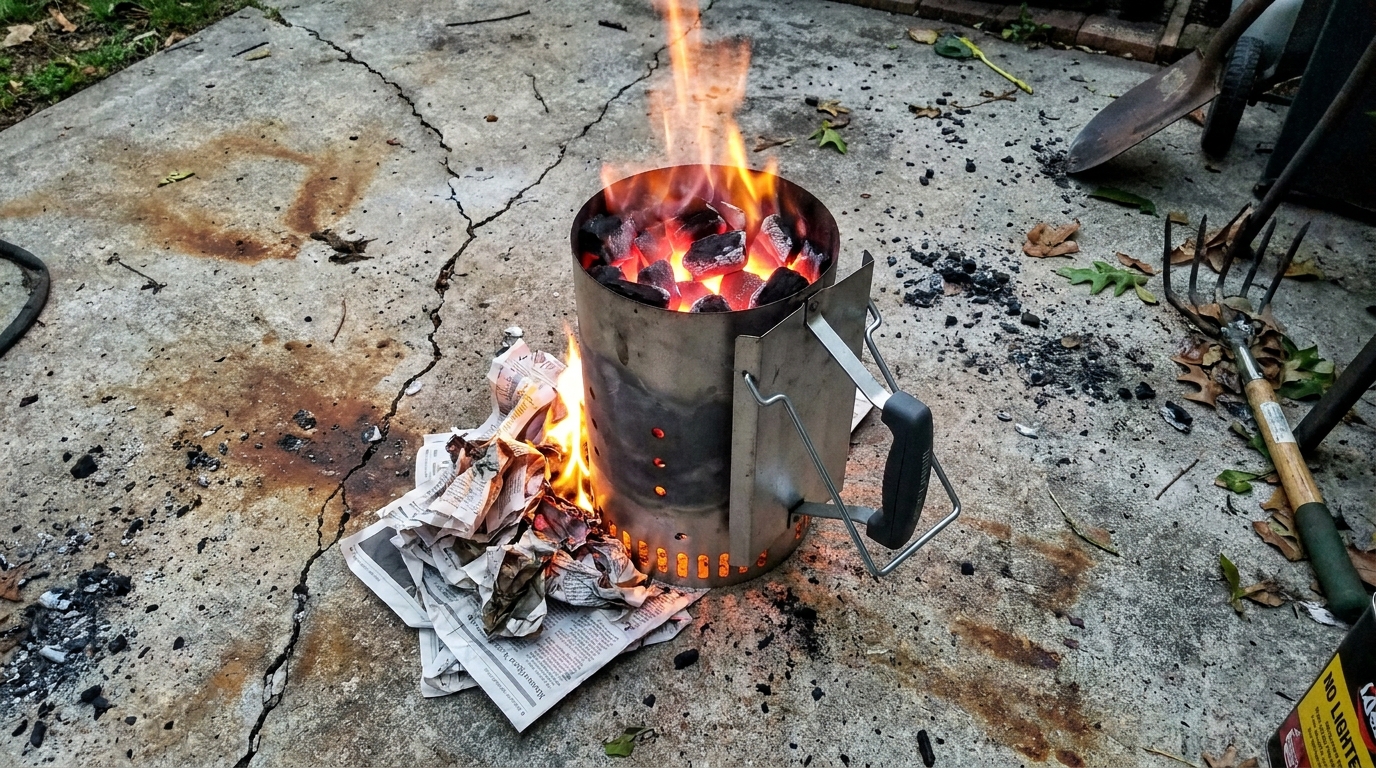
For your starter material underneath the wire bottom grate, you have three bulletproof choices. The classic method is crumpled newspaper: roll three or four full sheets into loose donuts or rings and tuck them underneath. If you rely on plain paper towels, pour a tablespoon of inexpensive vegetable or canola oil over the paper. The oil acts as a slow-burning lamp wick, extending burn time from thirty seconds to several minutes so the bottom coals ignite reliably. Alternatively, natural paraffin wax tumbleweeds or wood-fiber fire cubes rest directly on your grill grate underneath the center of the chimney.
Big B’s Take: My go-to method every weekend is two paper towels rolled loosely and drizzled with cooking oil. Plain newspaper burns hot, but it creates floating grey ash paper flakes that fly around your backyard. The oil-soaked paper towel burns with a steady, flame-focused heat for five full minutes—plenty of time to catch even the stubborn hard lump charcoal.
Step 2: Load Your Charcoal Strategy
Before pouring fuel into the top cylinder, decide whether you are using uniform briquettes or natural lump charcoal. Briquettes burn at a predictable rate and stack evenly, while lump charcoal burns hotter and ignites slightly faster due to its open cellular structure. Pour smaller, fist-sized charcoal pieces into the bottom of the chimney first. These smaller pieces sit closer to your ignition flame and catch fire quickly.
Fill the remainder of the chimney with medium and larger chunks up to the top rim. Avoid dropping massive log-like lumps into the chimney; giant pieces block air channels and slow down ignition. Stacking smaller fuel at the bottom and larger fuel up top creates a natural thermal chimney effect, allowing heat and hot gases to channel straight upward through the gaps between coals.
If you only need a medium fire for a short indirect cook or a quick searing session, fill the chimney half or three-quarters full. For long smoker setups, such as prepping a base for an overnight fire on an offset smoker, fill the cylinder level with the top edge. Never stack coals into a high pyramid above the top wire shield, as uncontained coals can tumble off during handling.
Step 3: Ignite and Monitor the Chimney Convection
Reach under the chimney bottom rim with a long butane lighter or match and ignite your starter paper or wax cube in two opposing spots. Within sixty seconds, you will hear a soft crackle as the paper ignites the bottommost charcoal embers. Thick white smoke will billow from the top of the cylinder—this is normal moisture and unburned organic compounds vaporizing as the coals heat up.
Leave the chimney undisturbed for 10 to 15 minutes. As heat mounts inside the steel cylinder, the thermal stack effect speeds up: cold air rushes in through the lower vents, feeding oxygen to the fire while hot air shoots out the top. As the coals catch fully, the heavy white smoke will thin out into faint heat waves and clean combustion, signaling the arrival of proper blue smoke conditions.
Do not poke or stir the charcoal while it is lighting. Agitating the chimney knocks unburned coals down into the wire grate, blocking incoming air. Let convection work uninterrupted until heat radiates strongly off the top rim of the cylinder.
Step 4: Recognize Ash-Over Doneness and Dump Clean
Your coals are ready to dump when the top layer of charcoal shows light grey ash around the edges and deep orange flames lick out through the top wire grid. If you dump too early while the top coals are still pitch black, your cooker temperature will lag and take longer to stabilize. If you wait too long after all coals turn white-hot, you lose valuable thermal mass and burn off your coal bed’s longevity before cooking starts.
Always wear heat-resistant leather pit gloves before touching the chimney handle. Grasp the main handle securely, using the secondary metal squeeze handle or helper bail if your chimney model has one. Stand upwind so heat and stray sparks drift away from your body and face.
Pour the burning coals smoothly into your firebox or grill grate. When mastering the offset smoker, rake the ignited coals into a concentrated mound against the draft intake vent to establish an intense thermal core for warming wood logs.
Common Chimney Lighting Pitfalls & Troubleshooting
If your chimney stalls out halfway through ignition, nine times out of ten the issue is restricted airflow. Check the bottom wire grate to make sure old ash from a previous cook hasn’t packed tight into the ventilation slots. Always dump cold leftover ash from your grill bowl before setting down a fresh chimney.
Another frequent failure occurs when newspaper burns away completely before igniting the bottom coals. This happens when paper is packed too tightly into the lower cavity, smothering flames before they reach the charcoal. Always roll paper into loose, hollow donuts rather than wad it into tight paper balls. Adding a few drops of vegetable oil to paper towels eliminates this issue entirely by providing a sustained flame.
Keep the fire steady and the drinks cold. I’ll see you at the pit. - Big B