The Big B's Guide to South Texas BBQ: Smoke, Spice, and Vaquero Soul
The Big B’s Guide to South Texas BBQ: Smoke, Spice, and Vaquero Soul
Hey folks, Big B here.
When most people talk about “Texas BBQ,” they’re usually picturing a specific scene. It’s a minimalist meat market in Central Texas. The brisket is rubbed only with salt and pepper and smoked low and slow over post oak. Don’t get me wrong. I love a good Central Texas bark as much as the next guy. But if you think that’s all Texas has to offer, you’re missing out on the real soul of our state’s smoke tradition.
Down in South Texas, things are a little different. This style stretches from San Antonio all the way to the Rio Grande Valley. It’s bolder, it’s spicier, and it’s deeply rooted in a cultural fusion that you won’t find anywhere else. We’re talking about the culinary bridge between the American South and Northern Mexico. For a quick snapshot of this style, check out my South Texas Style profile. It’s where the high-heat sizzle of mesquite meets the steam of underground pits. Grab a cold drink and a fresh tortilla. We’re going deep into the borderlands.
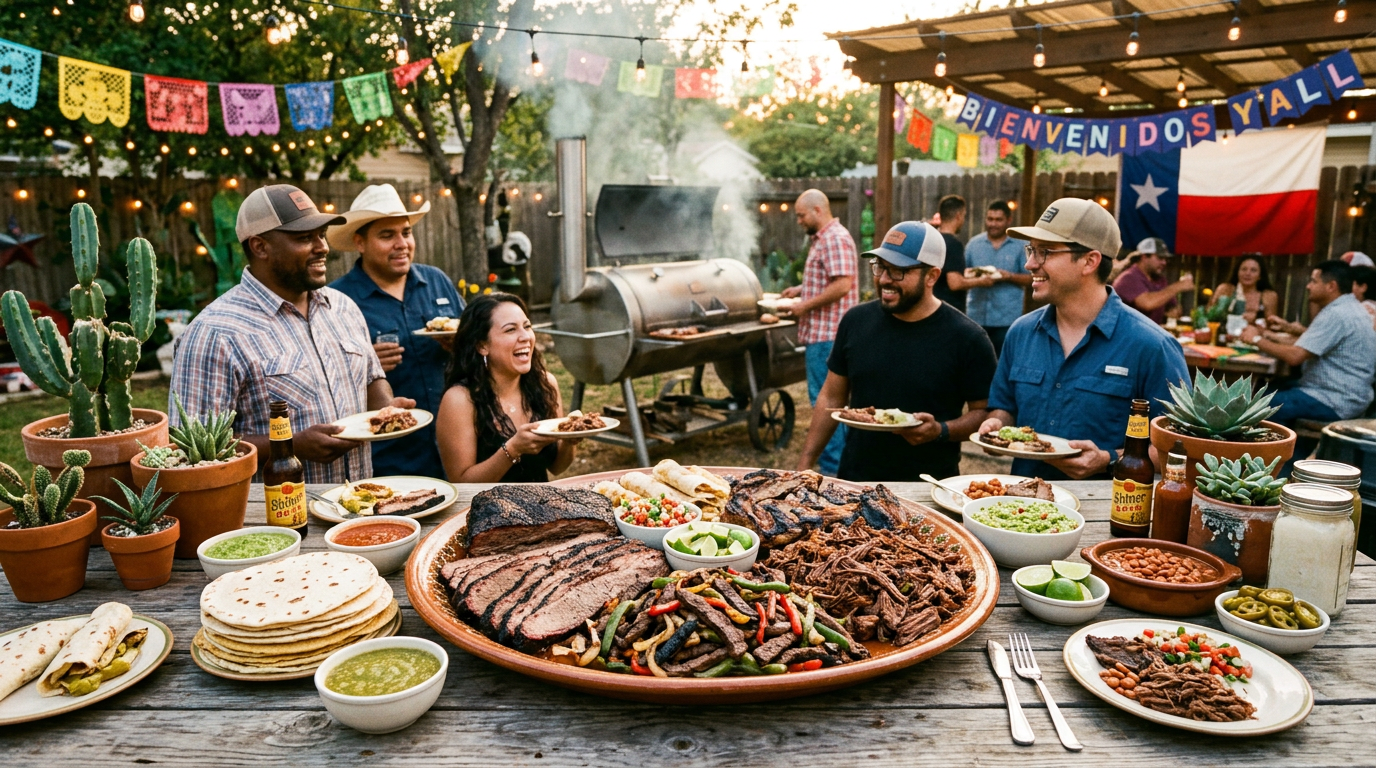
A South Texas feast is a vibrant mix of smoked meats, fresh tortillas, and bold salsas.
The Vaquero Legacy: Where it All Began
To understand South Texas BBQ, you have to understand the vaqueros. These were the Mexican and Tejano ranch hands. They managed the massive cattle herds across the Rio Grande Valley long before the first offset smoker ever hit the scene.
Ranch life was tough. The food was a reflection of that. These vaqueros often received the “throwaway” cuts of meat as part of their pay. These were the parts the owners didn’t want. We’re talking about the head, the tongue, and the tough diaphragm muscle we now know as fajitas.
Big B’s Take: This wasn’t utility cooking. It was brilliant adaptation. To make these tough cuts edible, the vaqueros developed ingenious methods. They used what was abundant. That meant Mesquite wood and the earth itself. They didn’t just cook meat. They engineered flavor and texture out of necessity. That frontier spirit is exactly what defines every plate of South Texas BBQ today.
The Wood of Choice: Taming the Mesquite Dynamite
If post oak is the reliable, steady heartbeat of Central Texas, Mesquite is the wild, volatile soul of the south. Mesquite is a dense, desert-hardwood that thrives in the arid Texas heat.
Chemically, it’s packed with lignin. This means it produces a smoke flavor that is bold, earthy, and sharp. It binds to the meat fast. Physically, it burns hot and fast. We’re talking massive BTUs.
Big B’s Pro Tip: I often call mesquite “a stick of dynamite.” It’s incredibly powerful. But if you don’t treat it with respect, it’ll ruin your meat in a heartbeat. If you don’t manage your airflow properly, mesquite can dump a bitter layer of creosote on your food. The goal is always Blue Smoke. That is the nearly invisible, efficient exhaust that adds flavor without the acrid bite.
The Subterranean Soul: Barbacoa de Cabeza
Barbacoa is the unfiltered expression of this heritage. Traditionally, it’s not cooked in a smoker above ground. It’s cooked in a pozo. That is a brick-lined pit dug into the earth.
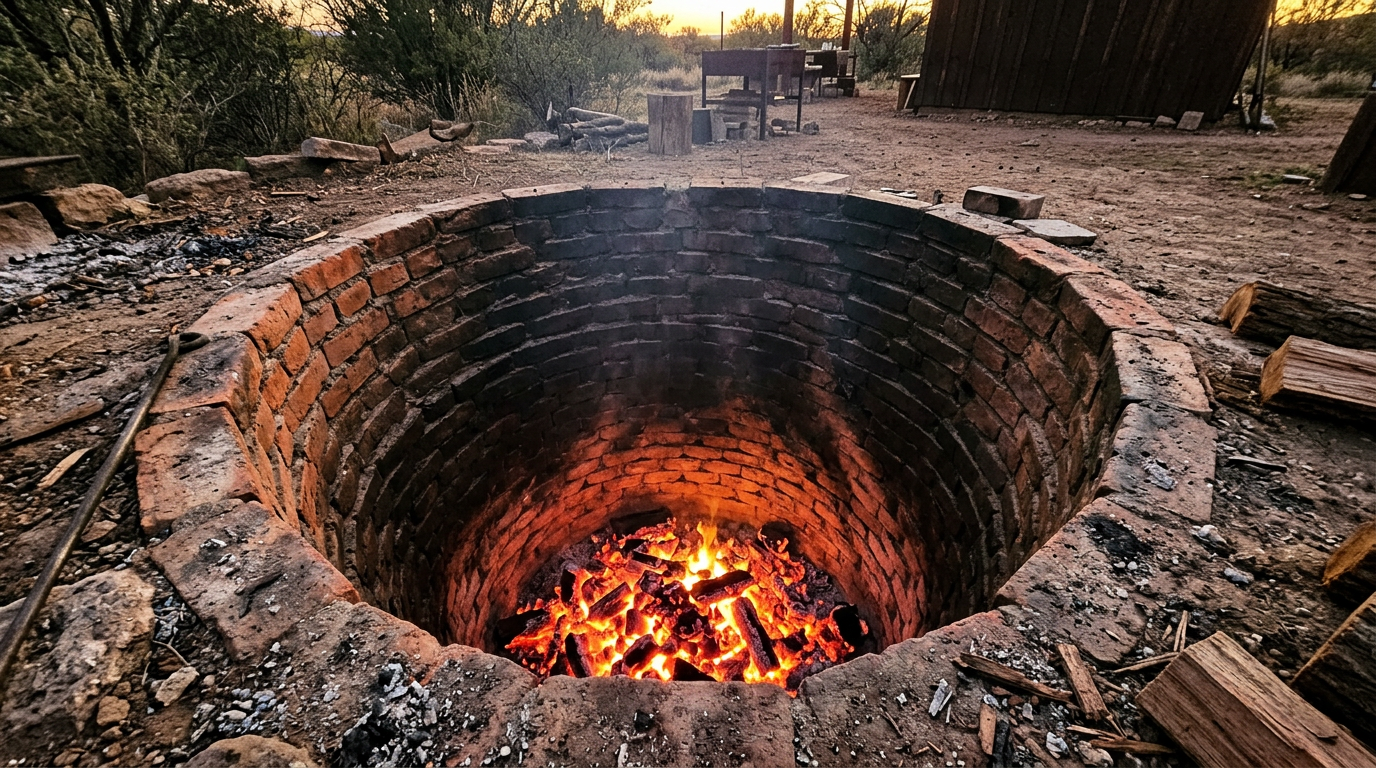 The traditional pozo uses the earth’s natural insulation to steam and smoke meat for hours.
The process is a masterclass in slow cooking:
- Excavate a trench and fill it with burning mesquite coals.
- Wrap a whole cow head tightly in maguey leaves or heavy-duty foil.
- Bury it beneath the earth and let it steam and smoke in its own juices for 12 hours or more.
The result? The connective tissue and collagen dissolve completely. This leaves behind meat that is exceptionally tender and rich. For a detailed walkthrough on how to get these results at home without a pit, see my guide on Sunday Morning Barbacoa: The Smoker Method. If you want to see this done the old-school way, you’ve got to visit Vera’s Backyard Bar-B-Que in Brownsville. They’re the only joint left in Texas legally allowed to use the subterranean pozo method. Serve it up with fresh corn tortillas and a roasted salsa ranchera. You’ll see why people travel from all over the world for a taste.
The Fajita Revolution: From Throwaway Cut to Global Icon
It’s hard to believe that fajitas were once a regional rancher’s secret. The word comes from faja, meaning belt or sash. This refers to the skirt steak. That is the long, thin diaphragm muscle.
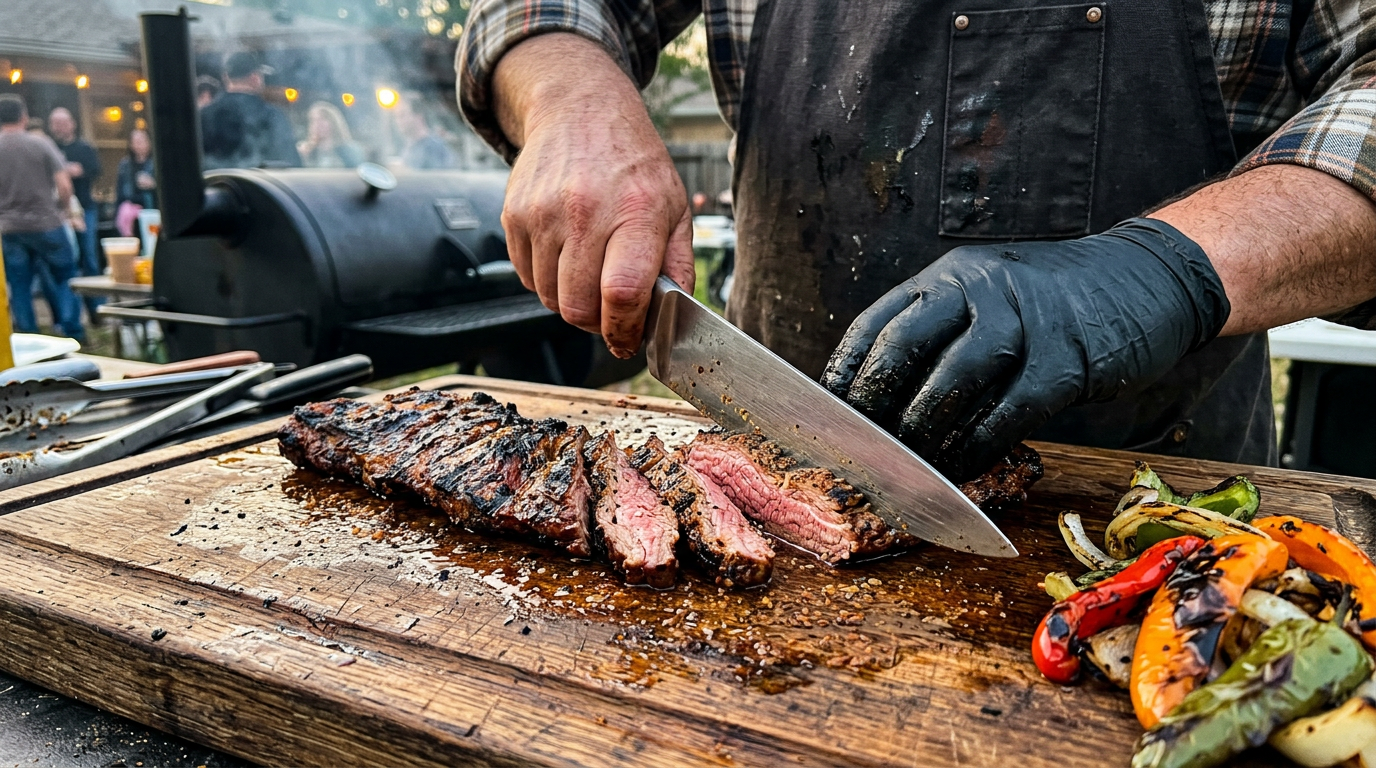 Slicing against the grain is the non-negotiable rule for tender, juicy fajitas.
Because it’s a heavily worked respiratory muscle, skirt steak is deeply flavorful but notoriously tough. The vaqueros solved this with two steps:
- Acidic Marination: They used lime juice and local spices to break down those fibers.
- Tacos al Carbon: Grilling the meat fast over high-heat mesquite flames.
Big B’s Take: The secret isn’t just the heat. It’s the slice. You MUST slice fajitas against the grain to shorten those muscle fibers. Wrap it in a soft flour tortilla. You’ve got a meal that was designed to be eaten with one hand while you’re tending cattle on horseback.
Cabrito al Pastor: The Shepherd’s Goat
A direct inheritance from the Spanish colonists, cabrito (young goat) is a prized dish in South Texas. True cabrito al pastor has a set of strict rules.
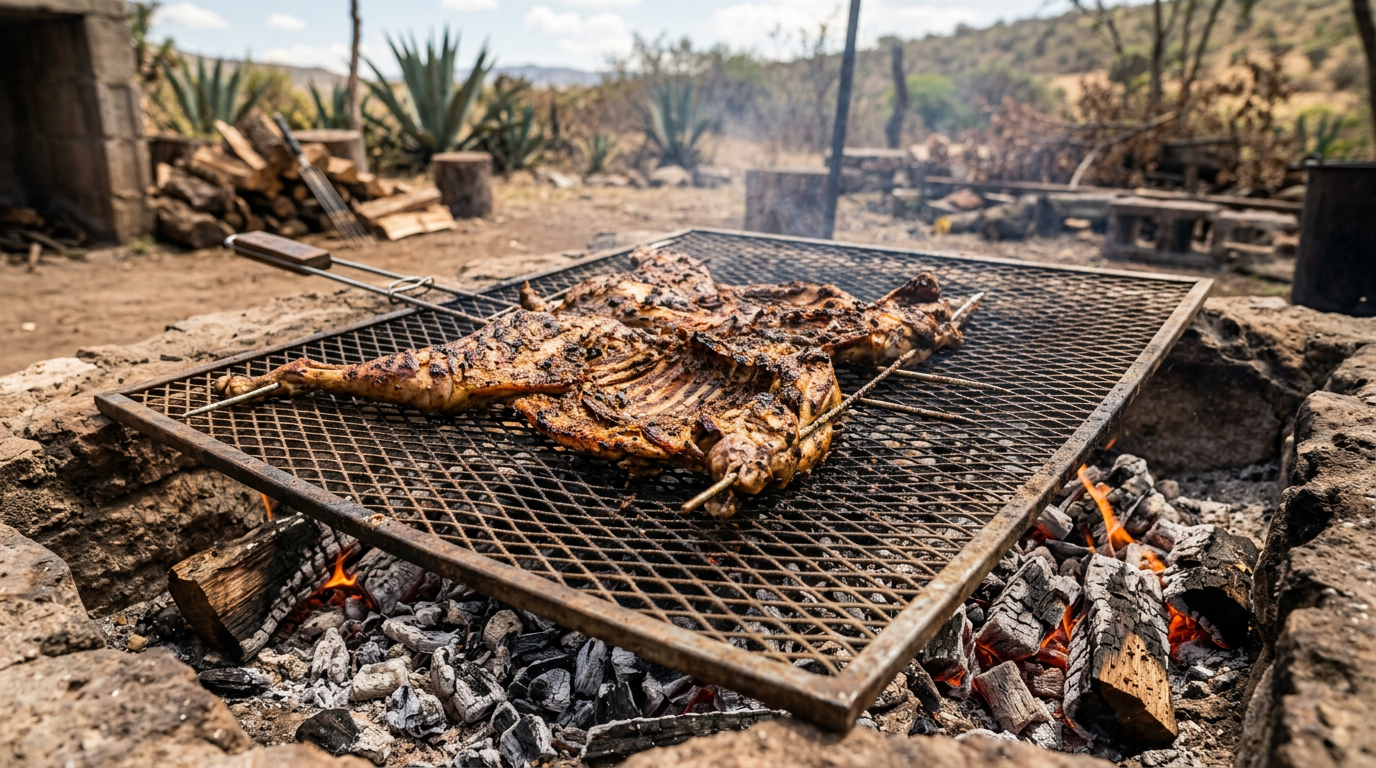 Roasting cabrito requires meticulous fire management and constant vigilance.
First, the goat must be milk-fed and processed between 25 and 30 days old. If it starts grazing on brush, the meat gets too gamey for this style. Cooking cabrito is all about fire management. Veteran pitmasters roast the animal over live mesquite coals using the Perimeter Coal Method.
Big B’s Take: You start by arranging your hot coals around the edges of the grill. This gently heats the ribs and legs first. The heat moves slowly toward the center. It uses the animal’s skin as a natural seal to trap all those juices inside. Season it simply with salt and pepper. Turn it every 15 minutes. In the final hour, rake those coals to the center to crisp that skin to a deep, golden brown.
The South Texas Brisket: Bold Spices vs. The Dalmatian Way
Brisket is king everywhere in Texas. But the South Texas approach would make a Central Texas purist’s head spin. While the Austin-area joints swear by the 50/50 salt and pepper Dalmatian Rub, we like things a bit louder down here.
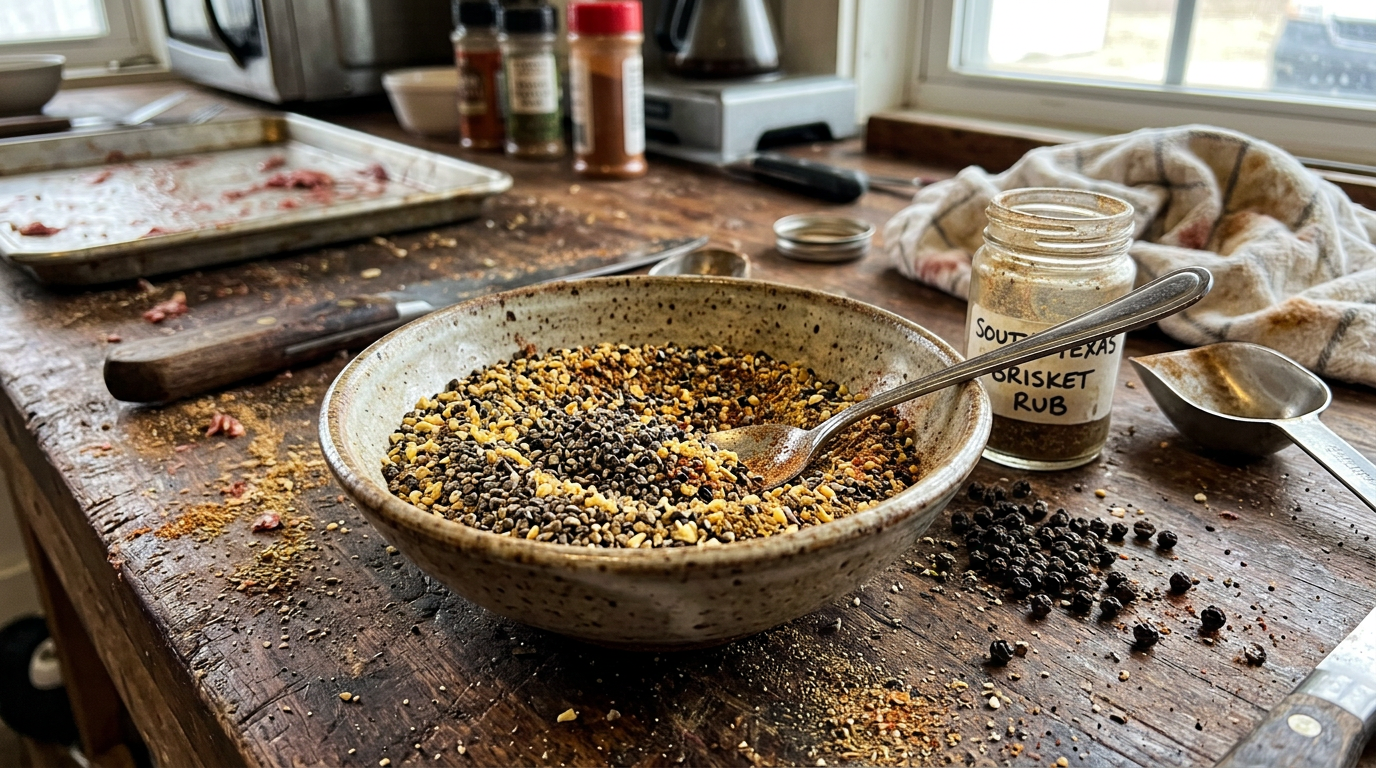 Coarse spices are essential for building a bark that can stand up to a long mesquite smoke.
A traditional South Texas brisket rub builds on that base with granulated garlic, onion powder, paprika, and cumin and American chili powder.
The Secret is the Grind: You can’t use fine, powdery spices for a 12-hour cook. They’ll just wash away. You need coarse spices. These larger granules stick to the rendering fat. They help build a massive, structured Bark that captures every bit of that mesquite smoke. If you’re new to the brisket game, check out my Brisket 101 guide to get the fundamentals down before you start experimenting with these bigger flavors.
Pork Dichotomy: Carnitas vs. Pulled Pork
Pork plays a vital role in the South. It highlights the split between Southern American and Mexican traditions.
If we’re making pulled pork, we’re smoking a shoulder low and slow until it hits 205°F. But if we’re talking carnitas, we’re talking about an entirely different process. Carnitas are fried and braised in their own rendered lard. They are seasoned with orange juice, Mexican oregano, and garlic.
Big B’s Take: Pulled pork is about the smoke. Carnitas are about the citrus and the crunch. Instead of being pulled, carnitas are often chopped with a cleaver. This gives you that dual texture of a juicy interior and a crispy exterior. It’s perfect for a taco botana platter.
Liquid Alchemy: Molasses, Mops, and Strawberry Glazes
The “no sauce” rule of Central Texas doesn’t apply here. South Texas sauce is distinct. It’s darker, tangier, and built on a molasses base. We balance that bitter sweetness with aggressive amounts of apple cider vinegar and the same spices found in our rubs like cumin and chili powder.
But the real flavor comes on the pit with Mop Sauces. We call this “Texas Barbecue Juice.” A mop is a thin liquid like beef stock, beer, vinegar, and spices. It’s applied by hand during the cook.
Why Mop? It replenishes surface moisture and slows down the cook through evaporative cooling. This gives the smoke more time to penetrate the meat. It builds a deeper pink Smoke Ring. And for a truly local twist, keep an eye out for finishing glazes made from Poteet Strawberries. The sandy soil of Poteet, Texas, produces some of the sweetest fruit in the world. It makes for a killer strawberry-jalapeño glaze.
The Mexican-American Pantry: Tortillas, Charro Beans, and Sopaipillas
The sides in South Texas aren’t an afterthought. They’re the backbone of the meal. Forget the flimsy white bread. Down here, we use fresh flour or corn tortillas to scoop up every drop of rendered fat.
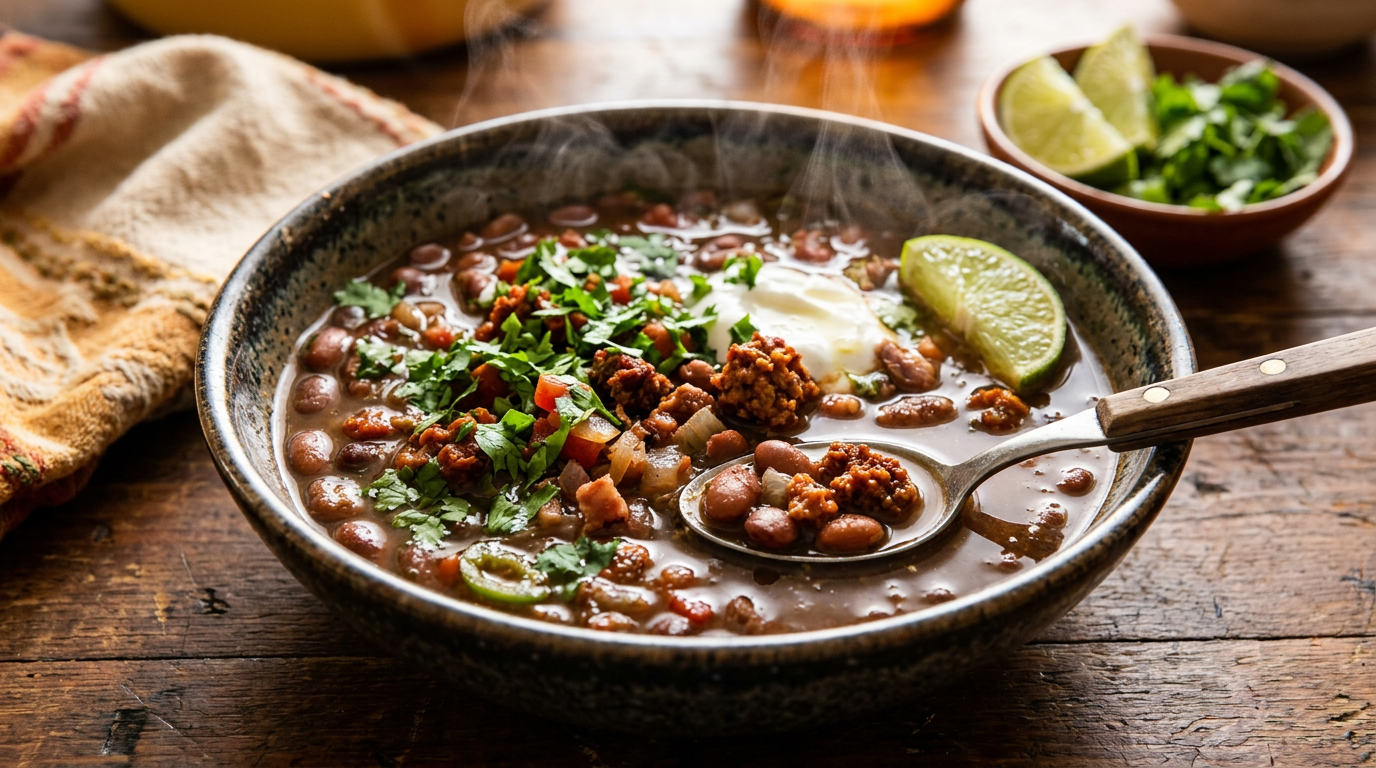 Charro beans are a hearty, brothy staple that perfectly complements smoky meats.
Instead of sweet baked beans, you’ll find Charro Beans. These are savory, brothy pinto beans simmered with bacon, ham, chorizo, and serrano peppers. Get my full recipe and the secret to the perfect simmer in The Borderlands Pantry: Charro vs. Borracho Beans. If you add a splash of dark Mexican lager to the pot, they become Borracho Beans.
The Sweet Finish: Every great South Texas meal ends with a sopaipilla. These are simple wheat dough pastries that puff up into hollow pillows when deep-fried.
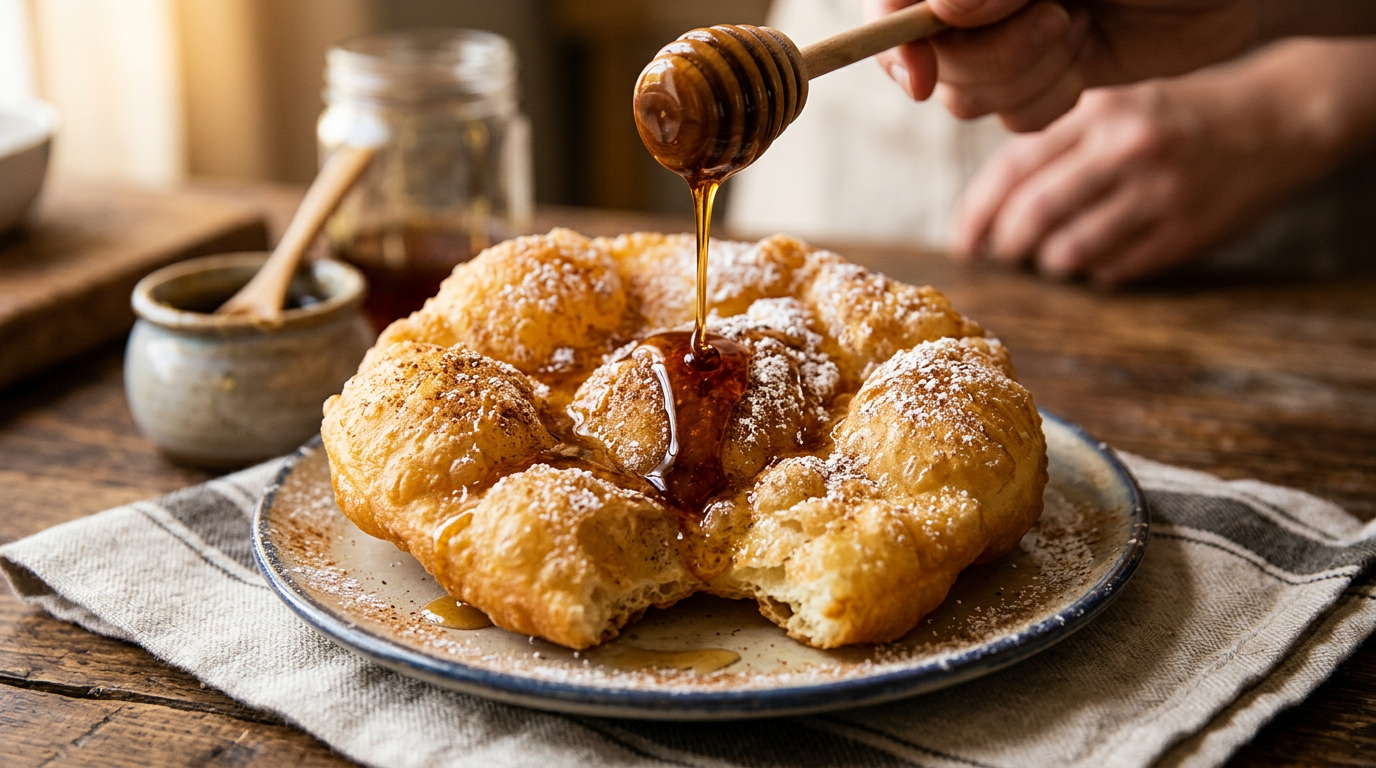 A hot sopaipilla drizzled with honey is the traditional way to end a South Texas feast.
Drizzle them with local honey and dust them with cinnamon sugar while they’re still piping hot.
Cultural Custodians: Where to Eat in the RGV and Beyond
If you’re ready to hit the road, here’s your South Texas bucket list:
- Vera’s Backyard Bar-B-Que (Brownsville): The James Beard award-winning home of pozo barbacoa.
- Teddy’s Barbecue (Weslaco): A modern spot doing high-level low-and-slow with a valley twist.
- Butter’s BBQ (Sinton): Famous for their brisket and elote.
Conclusion: The Enduring Fire of the Borderlands
South Texas BBQ isn’t just a style. It’s a living archive. It’s where ancient fire-cooking techniques met Spanish livestock and European butchery. It’s unapologetically bold and intensely spicy. It’s also scientific in its respect for the heat of mesquite.
While the rest of the world might obsess over the minimalist briskets of the Central Texas corridor, the real soul of Texas smoke is alive and well in the South. It’s forged at the intersection of cultures and harsh environments. It’s served with a side of tortillas and a lot of heart.
Keep the fire steady and the drinks cold. I’ll see you at the pit.
— Big B
Keep the Fire Burning
Tacos al Carbón: The Authentic South Texas Fajita Guide
Forget the sizzle platters. This is the real deal. Mesquite-seared skirt steak, acid-bright marinades, and the secret to the perfect against-the-grain slice.
Read GuideMastering the Heat of Mesquite: The South Texas Stick Burner's Guide
Mesquite is the stick of dynamite in the BBQ world. Learn how to tame the high heat and pungent smoke of South Texas's favorite wood.
Read GuideSunday Morning Barbacoa: The Smoker Method
Can't dig a hole in your backyard? No problem. Learn how to get authentic, gelatinous South Texas barbacoa results using your offset or pellet smoker.
Read Guide